

The Nigeria Police Force has adopted a comprehensive election security roadmap covering the entire electoral cycle as part of measures to strengthen preparations for the 2027 general elections.
This was contained in the communique at the end of the sixth Conference and Retreat for Senior Police Officers (CARSPO 2026), which ended on Wednesday in Owerri, Imo State.
The three-day conference, themed Developing a Nigeria Police Roadmap for Effective Management of Security During Elections, brought together senior police officers, experts, government officials and representatives of key institutions to examine emerging security challenges ahead of the 2027 elections.
The ceremony was attended by the Chairman of the Independent National Electoral Commission (INEC), Joash Amupitan, the President of the Nigerian Bar Association (NBA), Oyinkansola Badejo-Okusanya, SAN, and Imo State Governor, Hope Uzodimma, who also delivered a lecture during the conference.
Presenting the communique, the Force Public Relations Officer, Ani Iniedu, said the police would establish an election security task force with clearly assigned responsibilities, timelines, performance indicators and monitoring mechanisms.
The Force resolved to adopt a predictive and preventive framework using historical data, current intelligence and post-election reviews to identify electoral flashpoints, anticipate threats and continuously update operational plans.
Relevant election-security data will also be digitised and maintained in a secure central database.
The police further resolved to accelerate the transition to smart, digital and intelligence-led policing by standardising and digitising police processes, integrating relevant data systems and deploying artificial intelligence for investigations, crime analysis, threat detection and operational decision-making.
The communique, however, stressed that technology would support, rather than replace, professional judgement and would be subject to data protection safeguards, supervisory review and audit.
The Force also resolved to strengthen inter-agency coordination through the Interagency Consultative Committee on Election Security, including joint threat assessments and exercises, clearer command responsibilities, common reporting standards, interoperable communication systems and coordinated rapid-response mechanisms.
The conference called for adequate and timely funding of election-security operations, including logistics, personnel allowances, equipment, duty rotations and transportation before, during and after elections.
Operational plans must prioritise the protection of voters, electoral officers and election materials, particularly women, older persons and persons with disabilities.
The police also resolved to strengthen training and retraining of election-duty personnel on electoral laws, intelligence gathering, operational protocols, political neutrality, conflict prevention, crowd management, technology and human rights.
Officers found guilty of partisan conduct during elections, the communiqué said, should be held accountable and appropriately sanctioned.
Communication was also identified as an operational and leadership responsibility, with the Force resolving to ensure that police communication is timely, accurate and based on verified information.
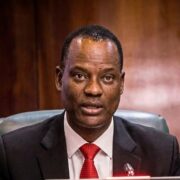
Speaking at the conference, Joash Amupitan, the chairman of the Independent National Election Commission, INEC said the police had made efforts to professionalise their conduct during recent elections but stressed that adequate funding remained critical.
“The question is whether the Nigerian police is playing its role properly as far as election is concerned. And in answer, as far as I’m concerned, the police have tried so much. They are trying to be professional in recent elections,” he said.
He said Nigerians often expected elections to be conducted to perfection without sufficiently considering the cost of providing the necessary security and logistics.
“If we want the election to be perfect, there must be a cost for it. Are we therefore ready to play the part of ensuring that the police are able to play their part, their responsibility as the lead agency?” he asked.
Amupitan said the police’s mission should ultimately reflect the expectations of Nigerians.
“The mission of the Nigerian police should be decided by the Nigerian people,” he said, adding that Nigerians expected a police force that was “properly equipped the way the Nigerian populace would want them to be properly equipped.”




Comments