
The federal government on Thursday, September 17, began a six-week review of Nigeria’s tax reforms to address implementation gaps, ambiguities and unintended consequences that have emerged since the new tax laws took effect in January.
The exercise will review key areas of the tax regime, including Value Added Tax (VAT) thresholds, withholding tax, capital gains treatment and multiple taxation, with recommendations expected to form part of the Finance Bill 2027.
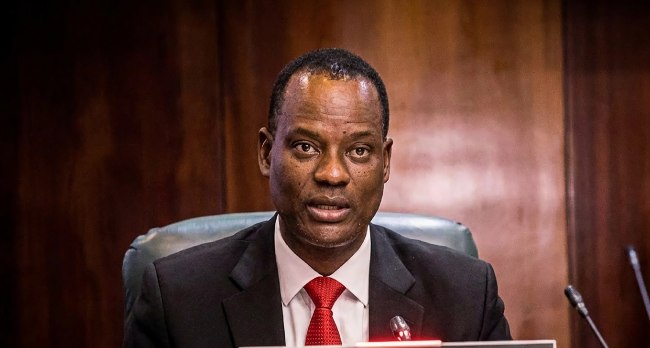
The minister of finance and coordinating minister of the economy, Taiwo Oyedele, disclosed this in Abuja while inaugurating the technical subcommittee on fiscal policy and tax reforms.
Oyedele, who is also the chairman of the presidential fiscal policy and tax reforms committee, said the implementation of the new laws had exposed areas requiring clarification, refinement, and further reforms.
“The real test begins when the law meets the economy, as businesses interpret it, administrators implement it, investors respond to it, and citizens experience it. Implementation inevitably reveals areas requiring clarification, refinement or further reform,” the minister said.
The Nigeria Tax Act 2025, Nigeria Tax Administration Act 2025, Nigeria Revenue Service (Establishment) Act 2025 and Joint Revenue Board (Establishment) Act 2025 came into full effect on January 1, 2026.
Oyedele said the government was moving from fundamental reforms to continuous improvement, stressing that the latest exercise was not intended to reverse the 2025 reforms but to address problems identified during implementation.
He said, “The Finance Bill 2027 should not be seen as just another annual legislative exercise. Our task is not to rewrite the 2025 reforms, but to preserve their fundamental principles while learning from implementation and responding to new economic realities.
“We must ask where implementation has revealed ambiguity, where unintended consequences have emerged, where compliance can be simplified, and where we can improve investment and competitiveness.”
The minister said the review would extend beyond taxation to fiscal policy and management, public financial management, debt, transparency, capital markets and cross-border capital flows.
According to him, the government received 134 submissions from across the geopolitical zones following its call for public input, in addition to submissions received in hard copies.
He said preliminary issues raised by stakeholders included proposals to clarify and simplify VAT thresholds, withholding tax and capital gains treatment.
Other proposals sought stronger action against multiple taxation and better coordination among revenue authorities, as well as increased digitalisation and data sharing to prevent taxpayers from repeatedly submitting information already held by government agencies.
Stakeholders also proposed stronger taxpayer rights, faster refunds, safeguards for small businesses and measures to improve investment and competitiveness in mining, renewable energy, healthcare and capital markets.
Oyedele urged the subcommittee to consider the economic impact of proposed changes, particularly on low-income households, workers and businesses.
“Every tax reform produces winners and losers; the question is whether a policy is fair, efficient and competitive, not whether it is popular with everyone,” he said.
“A provision that raises revenue may impose a far greater cost on the wider economy. The government must optimise the whole economy, not merely achieve a single objective.”
The minister also warned that complicated tax rules could increase the burden on businesses.
“Complexity is itself a tax; it raises compliance costs and creates room for discretion and arbitrage. Where two approaches achieve the same outcome, choose the simpler one,” he added.
Beyond preparing the Finance Bill 2027, the subcommittee was mandated to review the Deduction of Tax at Source Regulations 2024 and prepare revised withholding tax regulations.
It will also review the Companies Income Tax (Significant economic presence) Order 2020 and develop an updated framework aligned with the new tax laws and international practices.
Oyedele said withholding tax should remain an advance-payment and compliance mechanism rather than become an additional cost to businesses or a tax on working capital.
He warned that tying down companies’ funds through withholding taxes could be particularly damaging given Nigeria’s high financing costs.
“In a country where the cost of capital is very high, if you withhold the funds that businesses should use for expansion for even one year, it comes at a huge cost,” he said.
The minister gave the subcommittee six weeks to complete its assignment and submit its report.
The subcommittee is chaired by the permanent secretary of the federal ministry of finance, while the chairman of the tax advisory committee serves as co-chair.
The committee also comprises representatives of the federal ministry of justice, Nigeria Revenue Service (NRS), Joint Revenue Board, Nigeria Customs Service, Central Bank of Nigeria (CBN), Debt Management Office (DMO), Budget Office of the Federation and Nigerian Investment Promotion Commission (NIPC).
Others include the Small and Medium Enterprises Development Agency of Nigeria (SMEDAN), Manufacturers Association of Nigeria (MAN), Nigerian Economic Summit Group (NESG), Nigerian Bar Association (NBA), Association of National Accountants of Nigeria (ANAN), Chartered Institute of Taxation of Nigeria (CITN), and Institute of Chartered Accountants of Nigeria (ICAN).
Representatives of the Nigerian Association of Chambers of Commerce, Industry, Mines and Agriculture (NACCIMA) and the Big Four accounting firms, Deloitte, EY, KPMG and PwC, are also members of the subcommittee.
The co-chair of the subcommittee and chairman of the tax advisory committee, Albert Folorunsho, said the panel would seek to produce recommendations that respond to the realities facing taxpayers, businesses and the government.
“Our recommendations must therefore be technically sound, administratively practicable, and responsive to the realities confronting taxpayers, businesses, and government,” Folorunsho said.
He added that despite the six-week deadline, the committee would consult relevant stakeholders and pursue reforms that strengthen revenue mobilisation without imposing unnecessary burdens on taxpayers.





Comments