
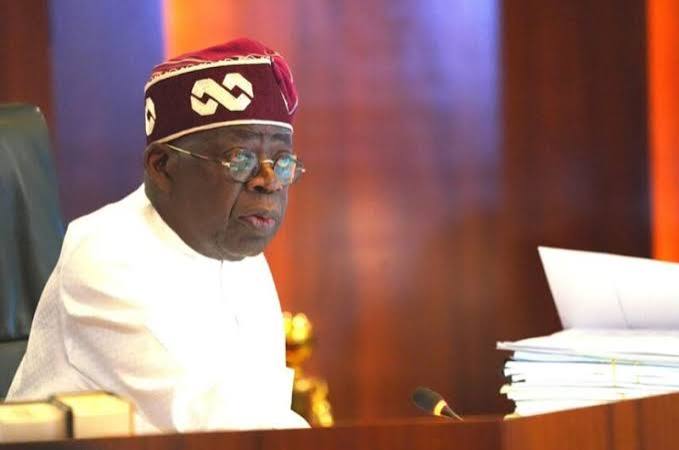
President Bola Tinubu on Wednesday, September 16, declared the elimination of child labour a national development priority.
Tinubu made the declaration in Abuja at the National Dialogue on Advancing the Implementation of Nigeria’s National Child Labour Policy and National Action Plan (2026-2030), where he also launched the 2024 National Child Labour Survey Report.
The president was represented at the event by the secretary to the government of the federation, Senator George Akume.
Also in attendance were the representative of vice president Kashim Shettima, senator Ibrahim Hadejia, minister of interior, Dr Olubunmi Tunji-Ojo, minister of education, Dr Tunji Alausa and other government officials.
According to a statement by Akume’s media aide, Yomi Odunuga, Tinubu said the federal government would intensify efforts to tackle the root causes of child labour.
“Every nation is judged by how well it protects its children. A child who is forced into labour instead of attending school loses more than an education.
That child loses opportunities, confidence, health and the chance to fully contribute to national development,” Tinubu said.
The president said the federal government considered the elimination of child labour not merely a labour issue but a national development priority linked to education, social protection, economic growth, poverty reduction, food security, human capital development and national security.
He said the administration would strengthen labour administration and inspection systems, child protection mechanisms and interventions targeting poverty, unemployment, inadequate access to quality education and social exclusion.
Tinubu said the theme of the 2026 commemoration, “Red Card to Child Labour: Fair Play for Children, Decent Work for Adults,” reflected Nigeria’s commitment to eliminating child exploitation.
He identified education as one of the strongest safeguards against child labour, noting that the administration was implementing reforms targeting out-of-school children, education data, teacher development and skills acquisition.
The president also said the Renewed Hope National Home-Grown School Feeding Programme would support school attendance while addressing hunger and nutritional challenges among children from vulnerable households.
Tinubu said the government was strengthening social protection and household resilience through initiatives including the NG-CARES Additional Financing Programme and the Human Capital Opportunities for Prosperity and Equity Programme.
According to him, the initiatives were designed to expand economic opportunities and help parents and caregivers earn decent livelihoods so that children would not be forced to work to support their families.
The president recalled that his administration launched the National Plan of Action on Ending Violence Against Children in Nigeria (2024-2030) in 2025.
He said the government had continued to pursue stronger enforcement of the Child Rights Act and other child protection laws.
Tinubu added that measures were being taken to improve safety in schools, particularly in vulnerable and high-risk areas.
He said Nigeria’s status as an Alliance 8.7 Pathfinder Country placed both a responsibility and an opportunity on the country to lead by example.
“As an Alliance 8.7 Pathfinder Country, Nigeria accepts both the responsibility and the opportunity to lead by example,” he said.
Tinubu said the National Child Labour Policy and the National Action Plan for the Elimination of Child Labour (2026-2030), being launched at the event, would provide a practical roadmap for translating Nigeria’s international commitments into measurable national action.
He called on state governments to support implementation of the National Action Plan, while urging the Nigeria governors’ Forum and Nigeria governors’ Spouses Forum to champion child protection initiatives across the country.
The president also charged employers to ensure that their supply chains were free of child labour.
He urged workers’ organisations, development partners, traditional and religious leaders, communities, parents and guardians to support the national effort to eliminate child labour.
Tinubu subsequently launched the National Child Labour Survey (Labour Force Survey) 2024 Report and the National Policy and National Action Plan for the Elimination of Child Labour (2026-2030).
He directed Ministries, Departments and Agencies, state governments, employers, workers’ organisations, development partners and civil society organisations to ensure full implementation of the policy and action plan.
The president commended the Federal Ministry of Labour and Employment, International Labour Organisation, ECOWAS, European Union, Government of the Kingdom of the Netherlands, United States Department of Labor, World Bank, National Bureau of Statistics and members of the National Steering Committee on the Elimination of Child Labour for supporting Nigeria’s efforts.
He stressed that Nigeria must now move “beyond commitment to action” to ensure that every Nigerian child enjoys education, protection and a childhood free from exploitation.



Comments