
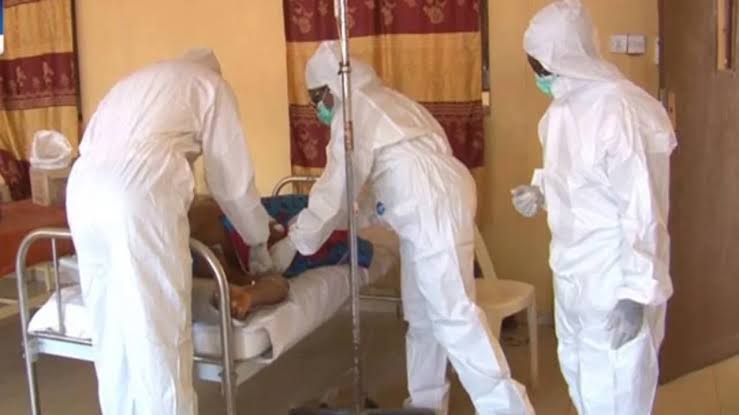
There have been 174 deaths in 28 states across 129 local government areas of Nigeria as of October 2024 due to Lassa fever.
The country has recorded 1,035 confirmed cases of the disease out of 8,569 suspected cases, according to the Nigeria Centre for Disease Control and Prevention (NCDC).
Lassa fever is an acute viral haemorrhagic fever caused by the Lassa virus, with the multimammate rat (also known as the African rat) being its natural reservoir. Other rodents can also act as carriers of the virus.
The country has also recorded 380 confirmed cases of cerebrospinal meningitis out of 4,915 suspected cases, with 361 deaths in 24 states across 174 local government areas during the 2023/2024 season.
The Director-General of NCDC, Dr Jide Idris, revealed these figures on Tuesday in Abuja.
Idris explained that the Federal Government of Nigeria, through the Federal Ministry of Health and Social Welfare and the NCDC, is at the forefront of efforts to prevent, detect, and respond to Lassa fever cases across the country each year.
“We have continued to see a steady increase in the number of states reporting Lassa fever cases. This rise is due, in part, to improved surveillance, better community awareness, environmental degradation from climate change, and other harmful human activities,” Idris said.
“In 2022, Nigeria reported 1,067 confirmed cases across 27 states and 112 local government areas. In 2023, 28 states and 114 local government areas reported confirmed cases, with 9,155 suspected cases, 1,270 confirmed cases, and 227 deaths.
“As of October 13, 2024, 8,569 suspected cases, 1,035 confirmed cases, and 174 deaths have been reported across 28 states and 129 local government areas.
“The disease also leads to significant loss of livelihood in the communities it affects. Heads of households are unable to work when exposed to Lassa fever, and when other household members are infected, the cost of care and treatment, which is often significant, strains existing household income, pushing families toward poverty in a swift turn of events.”
Idris also noted that cerebrospinal meningitis is an epidemic-prone disease with cases reported year-round in Nigeria.
However, he stated that weather conditions, such as the dry season, which brings dust, winds, cold nights, and frequent upper respiratory tract infections, increase the risk of infection, especially with crowding and poor ventilation.
“The highest burden of CSM in Nigeria occurs in the ‘Meningitis Belt,’ which includes all 19 states in the northern region, the Federal Capital Territory, and some southern states such as Bayelsa, Cross River, Delta, Ekiti, Ogun, Ondo, and Osun,” he said.
“In the 2023/2024 season, Nigeria recorded 4,915 suspected and 380 confirmed cases, with 361 deaths across 174 local government areas in 24 states, including the FCT. A total of 2,281,750 doses of Men5CV-ACWYX were administered in Bauchi, Gombe, Jigawa, and Yobe, covering 134 wards in 13 local government areas. The campaign targeted individuals aged 1 to 29 years, comprising 70 per cent of the population.
“Despite significant progress in surveillance, diagnostic capacity, and vaccination over the last few years, CSM remains a priority disease and an ever-present public health threat in Nigeria, with annual outbreaks in high-burden states presenting a challenge for people, health systems, economies, and communities.”
He urged Nigerians to receive the appropriate vaccination required to protect against meningitis, avoid close and prolonged contact with confirmed cases of CSM, and avoid overcrowding.




Comments