
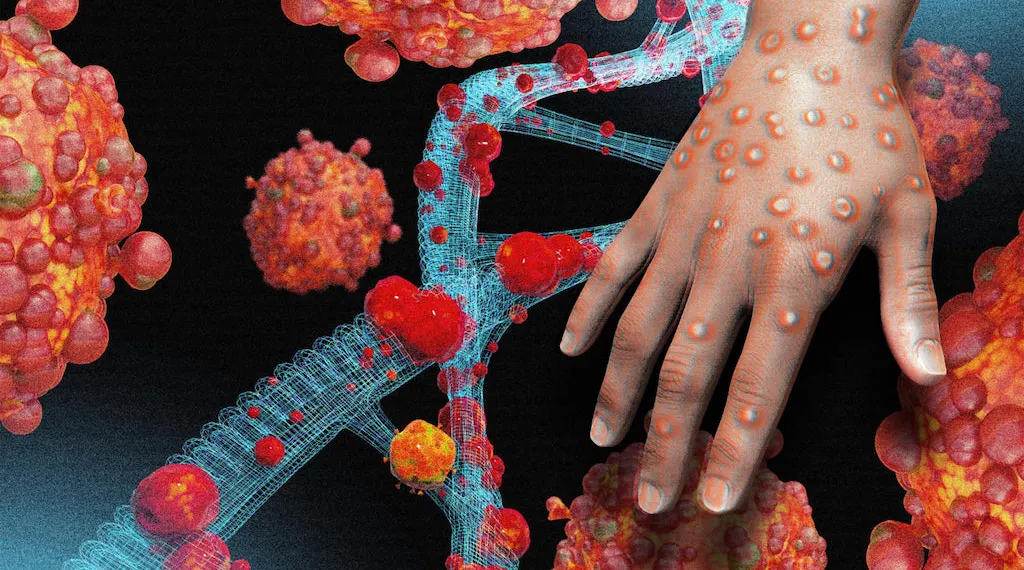
The African continent is on the verge of declaring a Public Health Emergency of Continental Security (PHECS) due to the ongoing spread of Mpox (Monkeypox) across numerous countries.
Jean Kaseya, Director General of the Africa Centre for Disease Control (CDC), made this announcement on Thursday, August 8, addressing the Mpox situation in the Democratic Republic of Congo and other African nations.
Mpox is a viral illness caused by the monkeypox virus, which is akin to smallpox but typically less severe.
Symptoms of Mpox include fever, rash, and swollen lymph nodes. The disease can be transmitted from animals to humans and between humans through close contact, respiratory droplets, and contaminated objects.
In 2022, the World Health Organization (WHO) and other health organizations renamed monkeypox to Mpox to mitigate the stigma and discrimination associated with the original term.
Kaseya emphasized the critical need for a unified response to effectively manage and contain the outbreak.
“Mpox is the reality, and Africans are dying.
“We are taking decisive actions to protect our people. Next week, more likely, we will declare the PHECS,” he said.
He said this step is meant to gather resources, improve responses between countries, and strengthen the continent’s health systems to handle the outbreak.
Kaseya also pointed out the need to involve young people across Africa in the fight against the disease.
The decision to declare the PHECS will be guided by advice from health experts and political leaders throughout Africa to ensure a united and effective response.
“This call for youths’ involvement is vital to harnessing their energy and innovation in combating the spread of the virus.
“This will help us to have an appropriate response, to help stop this outbreak, and also reinforce the health system in Africa,” he said.
According to him, the Africa CDC has been leading the effort to monitor and respond to the Mpox outbreak, which is causing major worry because it’s spreading quickly and leading to more deaths.
“Public health officials have warned that without urgent action, the situation could worsen, putting even more lives at risk.
“As the continent braces for the official declaration of the PHECS, there is a growing sense of urgency to contain the outbreak.
“The declaration is expected to facilitate the rapid deployment of medical supplies, enhance the sharing of critical information, and improve the overall resilience of public health systems across Africa.
“The global community is closely monitoring these developments, recognizing that Africa’s response to the Mpox outbreak will have far-reaching implications for public health security both on the continent and worldwide,” he said.
He mentioned that with Mpox cases rising across Africa, affecting all five regions and 16 countries, the continent is facing a serious public health challenge.
Since January 2022, Africa has reported 38,465 Mpox cases and 1,456 deaths, with cases increasing by 160 percent in 2024 compared to 2023.
Kaseya noted that the disease has spread through cross-border transmission, sexual contact, and co-existing health conditions, especially in areas with vulnerable populations like those suffering from malnutrition or HIV.
“The outbreak has reached new countries like Côte d’Ivoire, Kenya, and Uganda, marking their first-ever reported cases,” he said.
Regarding the case study from the affected countries, Kaseya mentioned that Côte d’Ivoire’s Ministry of Health reported its first Mpox outbreak, involving a 46-year-old agricultural worker.
He also noted that a 20-year-old student from Abidjan was found to have contracted the disease, in addition to the worker.
“The mode of exposure remains unclear, and the circulating clade is yet to be identified.
“In Kenya, a 42-year-old long-distance truck driver was identified as the first Mpox case at the Taita Taveta point of entry on the Kenya-Tanzania border.
“in Uganda, two female cases were reported in the Kasese district, both imported from the Democratic Republic of Congo (DRC),” he said.





Comments