
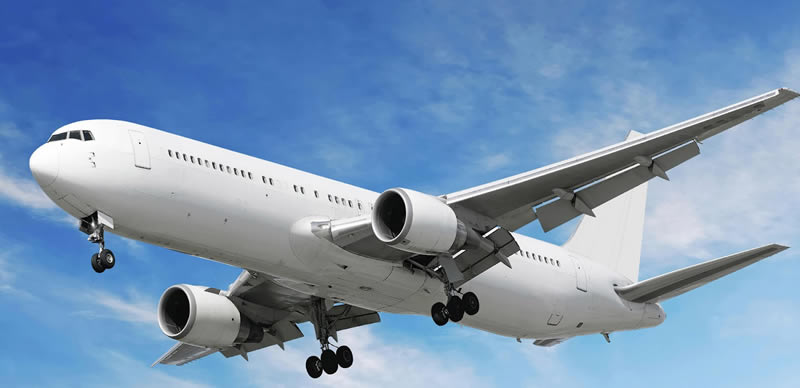
Domestic airlines in Nigeria are planning to halt operations from Thursday, April 30, over rising aviation fuel prices, raising fresh fears of widespread travel disruption across the country.
In a bid to avert the crisis, the minister of aviation and aerospace development, Festus Keyamo, convened a meeting with airline operators and fuel marketers in Abuja last week.
However, findings indicate that the tripartite talks ended in a deadlock, with operators unwilling to budge unless decisive action is taken.
At the end of the two-day meeting, the minister announced a 30 per cent reduction in aviation-related taxes as part of efforts to ease the burden on airlines.
While the gesture was acknowledged, operators insist it falls short of addressing the root problem.
Speaking on the first day of the meeting, vice president of the Airline Operators of Nigeria (AON), Allen Onyema, welcomed the government’s intervention but maintained that fuel marketers must account for the sharp rise in prices.
Onyema said, “This government has helped the industry more than anyone since 1999, and the president is even willing to waive 30 per cent of the debts airlines are owing.
“But the truth is that the marketers must be brought to book to explain how they came about the 300 per cent increase when even Dangote is surprised because what he is selling to us is still the cheapest.”
“Since the advent of the US-Iran war, there has been a spike in aviation fuel in Nigeria, which we, the Airline Operators of Nigeria, feel is not proportionate to the hike internationally.
“We expect that in the next 48 hours something drastic should be done because no airline will fly in this country in the next seven days if nothing is done, not because they don’t want to fly, but because fuel may not be available to us at sustainable pricing.”
Providing further insight into the financial strain, Onyema disclosed that fuel prices have skyrocketed from about N900 per litre before the crisis to between N2,700 and N2,900, with some marketers selling as high as N3,500.
“Before the crisis, we were buying fuel at about N900 per litre. Now it has risen to between N2,700 and N2,900, with some selling as high as N3,300 to N3,500,” he said.
According to him, airlines are now operating primarily to service fuel costs.
“All the airlines in Nigeria have been flying to pay fuel marketers only, and you don’t want to compromise safety,” he added.
Despite speculations about indebtedness, senior airline officials who spoke to our correspondent in confidence on Sunday, due to the sensitive nature of the matter, insisted that operators are up to date with payments to key aviation agencies, including the Federal Airports Authority of Nigeria (FAAN) and the Nigerian Airspace Management Agency (NAMA).
The AON had formally requested additional relief measures from the government.
In the letter dated April 21 and signed by AON president Abdulmunaf Sarina, the group called for the immediate suspension of aviation taxes, fees, and charges for at least six months.
The operators argued that the unprecedented rise in fuel costs threatens not only airline operations but also jobs and the stability of the aviation sector.
Among other demands, the AON proposed the introduction of a non-taxable fuel surcharge, a standard practice in international aviation to help airlines manage rising costs.
They also urged the government to direct oil marketers to issue credit notes to airlines affected by what they described as excessive and arbitrary price hikes.
In addition, the group called for the establishment of an industry tax reform committee to review existing charges, assess their relevance, and align them with global standards.
As the deadline approaches, uncertainty hangs over Nigeria’s aviation sector.



Comments