
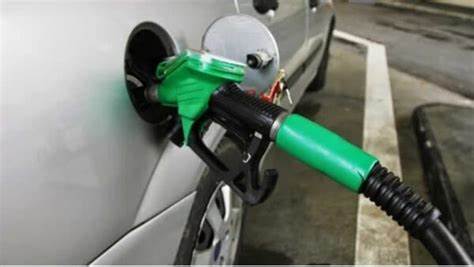
The federal government, on Monday, August 1, insisted that it had not raised the pump price of Premium Motor Spirit (PMS), popularly called petrol, above the regulated cost of N165/litre.
It said the hike in the cost of the commodity, currently between N175/litre and N230/litre, depending on the location of purchase, was done by fuel marketers.
The federal government, however, could not explain why it was not enforcing the approved price.
Fuel marketers across the country recently raised the price of petrol above the approved N165/litre rate without any official approval by the federal government.
This was despite the fact that the cost of commodity was still being regulated.
The marketers had argued that the N165/litre approved price was not sustainable and was contributory to the scarcity of petrol in many locations nationwide.
It was learnt that the fuel marketers eventually hiked the pump price of petrol and had maintained the price increase for several weeks running without any resistance by the federal government.
The minister of state for petroleum resources, Chief Timipre Sylva, while speaking at the stakeholders’ consultation forum on midstream and downstream petroleum regulations organised by the Nigerian Midstream and Downstream Petroleum Regulatory Authority (NMDPRA) on Monday, August 1, insisted that the federal government had not raised the price of petrol.
Sylva, when asked to comment on the disparity in the pump prices of petrol and why the government had not waded into the matter, said, “Well, I can tell you authoritatively that we have not deregulated.
“The government is still subsidising, if there are increases in the price it is not from the government, it is from the marketers.
“Of course, I will talk to the Nigerian Midstream and Downstream Petroleum Regulatory Authority (NMDPRA) chief executive to ensure that they actually regulate the prices.
“However, this is not from the government because we have not deregulated,” he added.
On the essence of the forum, the chief executive, Nigerian Midstream and Downstream Petroleum Regulatory Authority (NMDPRA), Farouk Ahmed, said the programme was in accordance with the demands of the petroleum industry act to allow stakeholders participate in the making of regulations which impact on them.
He said, “Section 216 of the petroleum industry act mandates the authority to consult with stakeholders prior to finalising any regulations or amendments to regulations.
“However, we do not consider this an obligation or box-ticking exercise as continuous engagement with our stakeholders to enable their business is at the core of our regulatory philosophy.”
Ahmed further noted that the regulator had so far published and received significant feedback on the ten regulations to be considered, as he outlined them to include the petroleum (transportation and shipment) regulations, assignment and transfer of licence and permit regulations, and midstream and downstream petroleum (operations) regulations, the petroleum pipeline regulations, gas pricing domestic demand and delivery regulations, natural gas pipeline tariff regulations, and midstream and downstream decommissioning and abandonment regulations, The Witness reports.
He named the remaining to include the environmental regulations for midstream and downstream operations, midstream and downstream gas infrastructure fund regulations, and environmental remediation funds regulations.
Ahmed also assured industry stakeholders that their inputs as regards the regulations during the forum, would be taken seriously, adding that the aim was to grow the Nigerian oil sector.



Comments