
The federal government, on Tuesday, December 13, ordered commercial banks holding majority stakes in six electricity distribution companies (DisCos) to divest within 12 months.
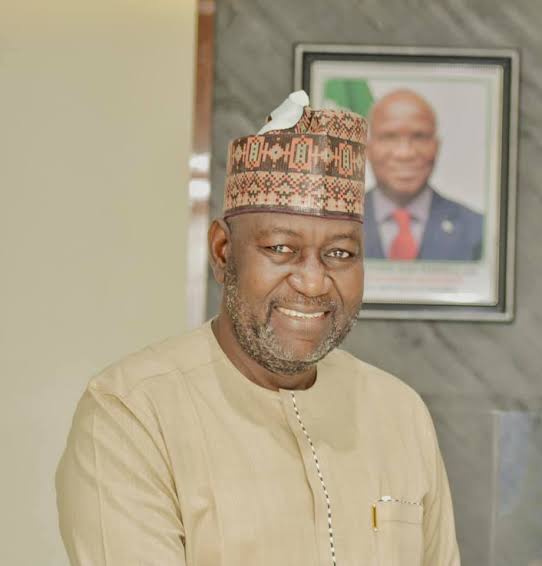
This was made known by the minister of power, Abubakar Aliyu, at 11th edition of the ‘PMB administration scorecard series (2015-2023)’ organised by the federal ministry of information and culture on Tuesday.
Aliyu said that the government was monitoring the operations and divestment process of the six DisCos to ensure compliance with the core objectives of restructuring the electricity firms.
The minister noted that the federal government sacked the previous core investors to make them more responsible, adding that the government was determined to put the DisCos on their feet.
According to Aliyu, restructuring of the six DisCos included the sacking of the previous core investors due to poor performance and the composition of a new board and management to run them, The Nation reports.
The minister said that, “We have sacked the management and allowed the lenders to take over because we are currently restructuring.
“Either banks or the Asset Management Corporation of Nigeria (AMCON) hold the franchise.
“So the banks have taken over 60 percent ownership. We have allowed the banks, the Bureau of Public Enterprises (BPE) and the Central Bank of Nigeria (CBN) to take control.
“The lenders provided the chairmanship of the DisCos.
“However, BPE provided part of the management, including the managing directors and then the CBN provided the chief financial officer (CFO) and the auditor.
“So this is the position that we currently are with the six discos. They are Abuja, Kano, Kaduna, Benin, Ibadan and Port Harcourt. One may ask why only six? What about the rest?
“You know we have 11 of them. Three out of the 11 DisCos are performing well, that is two in Lagos and one in Enugu. They are not doing badly at all
“Jos DisCo was re-concessioned in 2022 and Yola was re-concessioned last year.
“These two DisCos are working very hard to improve. So we have to give time to settle down.
“In a way, we have restructured the 11 DisCos in one way or the other. Now, it is time to help them since we have made them more responsible.
“We are trying to help them to get on their feet,” he added.
He noted that the administration of President Buhari will bequeath 22,000MW capacity to the nation before leaving office next year, adding that Siemens Energy was engaged in the power sector to raise the operational capacity from 7000 MW to 11, 000MW and 25, 000MW in 2025.
Aliyu, while speaking on tariffs, said that electricity is not a cheap commodity the world over.
He said that Nigerians can cut costs by being careful about how they manage and use electricity, noting that the government was doing its best to protect lower-income citizens because of the nexus between lack of access to electricity and poverty.
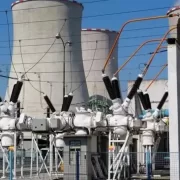
Aliyu said that the federal government completed a total of 105 power transformer projects between 2015 to 2022, adding a capacity of 6,216MVA to the national grid.
He listed some of the completed power transformer/substation projects including the 150MVA 330/132kV Interbus Power Transformer at Ughelli, Delta IV transmission substation and the 150MVA 330/132kV power transformer at Ayade transmission substation.
Others are the 2x150MVA 330/132/33kV Substation at Lafia, Nasarawa State, and the 2x60MVA 132/33kV Dawaki/Gwarinpa Substation which was recently completed in November 2022 under the Abuja Feeding Scheme.
The projects also included the 2x60MVA 132/33kV Gagarawa substation, 2x60MVA 132/33kV substation at Adiabor, 2x30MVA 132/33kV Yelwa Yauri the1x30MVA 132/33kV Ilashe substation and the 1x40MVA 132/33kV substation at Bichi, Kano state among others.
The minister noted that some transmission line projects nearing completion and expected to be inaugurated by the first and second quarter of 2023 included the Kaduna-Jos double circuit transmission line and Benin-Ajaokuta 330kV single circuit.
He pointed out that the ongoing $2 billion electricity grid maintenance, expansion and rehabilitation programme across the country is estimated to create 45,000 direct and indirect jobs.
Aliyu stated thar in delivering the projects, the federal government leveraged the support of the various state governors to resolve Right of Way (ROW) issues.
He gave the example of the ROW issue recently resolved in Kumbotso-Dan Agundi in Kano state which, according to him, lingered for more than 10 years.

Comments