
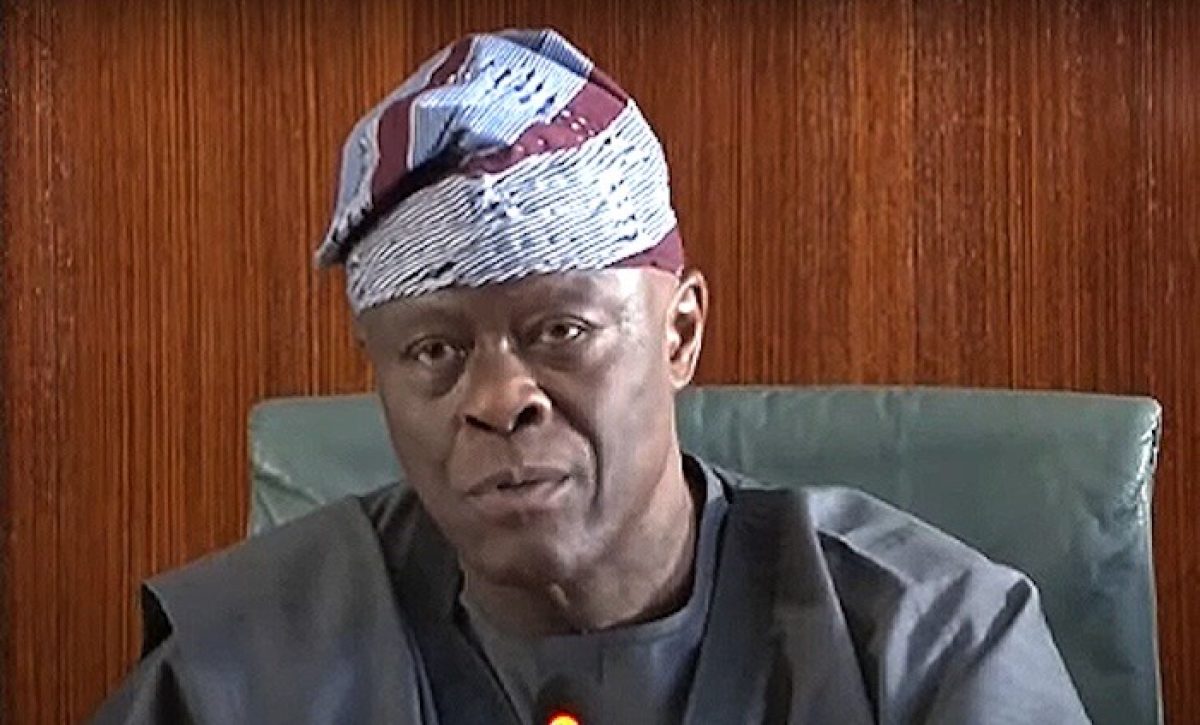
The Minister of Finance and Coordinating Minister of the Economy, Wale Edun, has given a clue into how the current administration of President Bola Tinubu plans to solve the problem of economic hardship in the country.
Edun on Friday, February 23, also spoke on a wide range of issues including inflation, cost of living, food security, cash disbursements to households, and collaboration with the Central Bank of Nigeria, CBN, interest rates.
Since the declaration of an end to fuel subsidy and the floating of the naira, the cost of living in Nigeria has skyrocketed, which has led to protests in some parts of the country.
Speaking on the development, Edun noted that the current administration anticipated a rise in the cost of food and other essential items owing to the reforms.
He said, “What I think is important to say at this time is that food prices in particular are elevated and we all know why.
“It is part of the generally expected rise in inflation as the macroeconomic measures, as the reform measures, the corrective measures to put the economy on a straight path take effect,” he added.
According to Edun, the Federal Government is working to alleviate the hardship, especially for the poor and vulnerable.
“But I think the important thing to point out, at this time, is that the focus of Mr President is on keeping his promise, particularly to the poor and the vulnerable.
“Food prices are elevated, and the purchasing power is limited and that is what Mr President is speaking directly to through the intervention programme of direct payments of N75,000 each over three months,” he said.
The minister further said, “That is N25,000 a month to 15 million households and each household is about five people. So, that effectively provides funding for 75 million people.”
Edun also re-echoed the Federal Government’s plan to provide grains to help cushion the rising cost of food items.
Speaking on the development, Edun noted that the current administration anticipated a rise in the cost of food and other essential items owing to the reforms.
He said, “What I think is important to say at this time is that food prices in particular are elevated and we all know why.
“It is part of the generally expected rise in inflation as the macroeconomic measures, as the reform measures, the corrective measures to put the economy on a straight path take effect,” he added.
He said the Federal Government is working to alleviate the hardship, especially for the poor and vulnerable.
“But I think the important thing to point out, at this time, is that the focus of Mr President is on keeping his promise, particularly to the poor and the vulnerable.
“Food prices are elevated, and the purchasing power is limited and that is what Mr President is speaking directly to through the intervention programme of direct payments of N75,000 each over three months,” he said.
The minister further said, “That is N25,000 a month to 15 million households and each household is about five people. So, that effectively provides funding for 75 million people.”
He also re-echoed the Federal Government’s plan to provide grains to help cushion the rising cost of food items.
“More recently, there was a 42,000 metric tonnes release from the strategic reserves with another 60,000 metric tonnes to come. This is all in a bid to make sure there is food in the marketplace,” he said.
On the issue of fuel subsidy removal, Edun said the subsidy was costing Nigeria N400 billion monthly.
“In terms of the government’s finances, they have been revamped and repaired,” he said.
“And it is not just the fact that there has been the removal of the petroleum subsidy which was costing N400 billion every month to the government at its height.”




Comments