
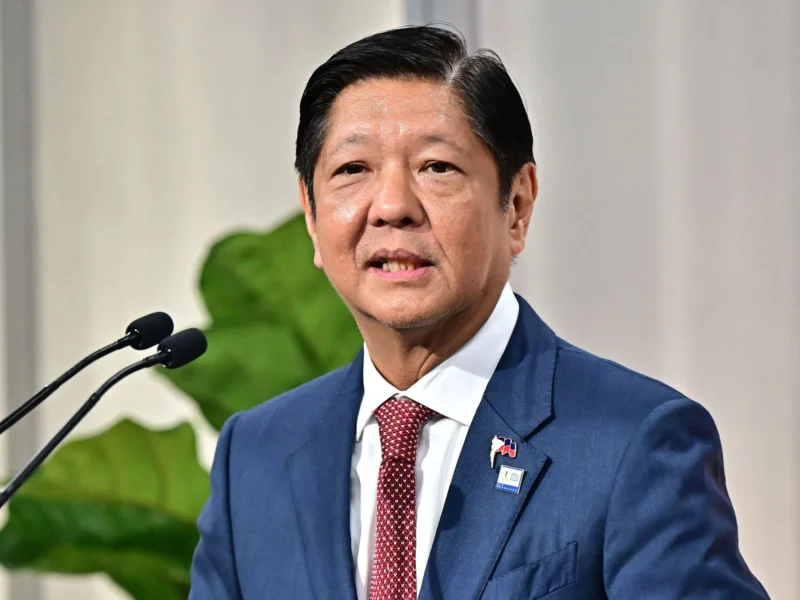
Philippine president Ferdinand Marcos on Tuesday, March 24, declared a state of national energy emergency, citing risks to the domestic fuel supply and energy stability created by the Middle East war
In executive order 110, Marcos said the Department of Energy (DOE) has determined that the ongoing fuel crisis poses a danger to the country’s power supplies.
“A state of national energy emergency is hereby declared in light of the ongoing conflict in the Middle East, and the resulting imminent danger posed upon the availability and stability of the country’s energy supply,” Marcos said.
Under the order, the DOE is authorized to implement fuel optimization efforts, including load adjustments, and also protect against profiteering and hoarding.
The president said there will be a consolidated government effort called the Unified Package for Livelihoods, Industry, Food, and Transport (UPLIFT) to coordinate efforts.
UPLIFT has been authorized to monitor food supply chains, fuel prices, oversee transportation, and more.
The order also authorises the DOE to make advance payments of up to 15 percent to secure fuel contracts, while taking direct action against hoarding and profiteering.
“The declaration will enable the government, through the Department of Energy and other relevant agencies, to implement responsive and coordinated measures under existing laws to address the risks posed by disruptions in the global energy supply and the domestic economy,” the order stated.
Additionally, the order grants the transportation department the authority to direct public transport fuel subsidies, reduce or suspend toll charges and aviation fees, and fast-track assistance to individuals affected by the crisis.
The Philippines, which has some of the highest energy costs in the region, relies heavily on imported fuel to power its plants.
The archipelago nation of about 116 million people depends on coal for roughly 60 percent of its electricity generation.
Energy secretary Sharon Garin said that with the cost of liquefied natural gas (LNG) rising sharply, the country may temporarily rely more on coal.
“While we aim to maximise the use of local coal, the Philippines is also considering increasing imports from Indonesia, its top supplier,” Garin said.
“We have engaged generation companies, particularly coal-fired plants, to assess how much they can boost output.
“If successful, this could help reduce electricity tariff increases driven by the Middle East conflict.”
Indonesia has assured the Philippines that there are currently no restrictions on coal exports.
“There is no restriction on our importation of coal from Indonesia at this time,” Garin said.
In January, president Marcos announced a significant natural gas discovery near the country’s rapidly depleting Malampaya offshore gas field.
The discovery is expected to extend the life of the field, which supplies about 40 percent of electricity to Luzon, the country’s main island, and was projected to be exhausted within a few years.





Comments