
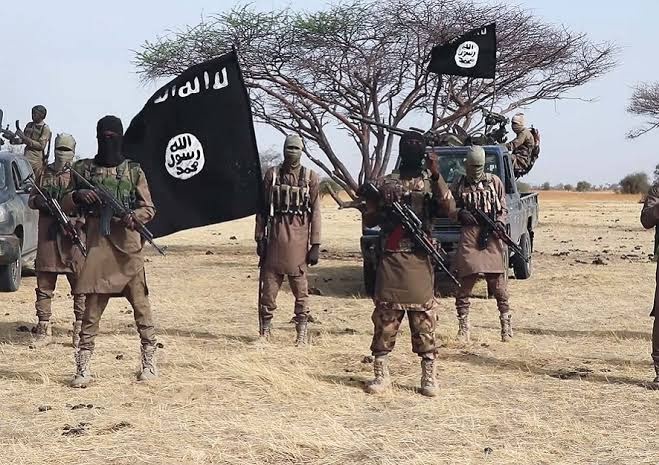
The Islamic State West Africa Province, ISWAP, it has been learned, has expanded its drone capabilities and is finalising plans for coordinated aerial strikes on Nigerian military positions in Yobe and Borno states.
A confidential security assessment suggests the group intends to deploy Unmanned Aerial Vehicles, UAVs, against military formations and patrols operating in key conflict zones across the two states.
Sources familiar with the matter revealed that ISWAP commanders have completed arrangements for attacks expected to involve multiple drones targeting selected military positions simultaneously.
Fighters stationed in the Timbuktu Triangle and Sambisa Forest areas recently received approximately 35 drones, transported through the Lake Chad corridor, a well-known insurgent logistics route along Nigeria’s north-eastern borders.
Security officials confirmed that the UAVs have undergone test flights and are operationally ready, heightening concerns among military officials over a potential escalation in asymmetric warfare tactics.
In recent years, ISWAP has increasingly employed drones for reconnaissance and offensive operations, marking a dangerous evolution in the decade-long conflict in the North-East. Security experts note that the group typically modifies commercially available drones to monitor troop movements, adjust mortar fire, and occasionally drop locally fabricated explosives on military targets.
Military analysts say ISWAP’s growing drone sophistication mirrors trends among extremist groups in other conflict zones, where low-cost UAVs are adapted to compensate for conventional military disadvantages.
Despite intensified counter-terrorism operations by Nigeria’s armed forces across Borno, Yobe, and Adamawa states — which have degraded insurgent strongholds and eliminated or captured key commanders — groups like ISWAP and Boko Haram continue to adapt, using improvised explosive devices, ambushes on supply routes, and aerial surveillance.
Security sources indicate that the latest intelligence has prompted calls within the Nigerian military for urgent deployment of robust counter-drone measures to protect troops on the frontlines.
Neither the Nigerian Army nor the Defence Headquarters has publicly commented on the intelligence report at the time of filing, although officials have previously acknowledged the growing challenge posed by insurgents’ use of technology for military purposes.
The Boko Haram insurgency, which began in 2009, has claimed tens of thousands of lives and displaced millions across Nigeria’s North-East.
ISWAP, which broke away from Boko Haram in 2016 and later pledged allegiance to the Islamic State, has since become one of the most lethal armed groups in the Lake Chad region.




Comments