
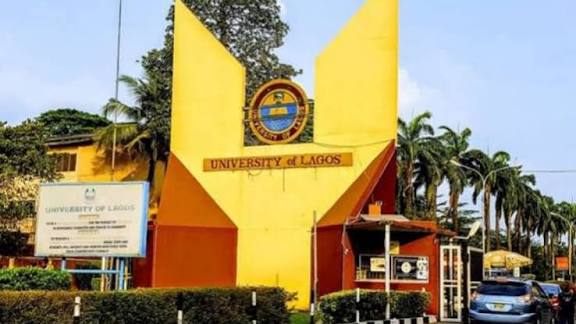
The University of Lagos (UNILAG) and the University of Birmingham, United Kingdom (UK), on Thursday, January 29, signed a Memorandum of Understanding (MoU) to jointly run a degree programme in Nigeria.
The agreement was signed at the UNILAG auditorium and was witnessed by representatives of the University of Birmingham, the British high commission in Lagos, officials of the National Universities Commission (NUC), and the Tertiary Education Trust Fund (TETFund).
Speaking at the event, Nick Vaughan-Williams, provost and vice-principal of the University of Birmingham, described the MoU as a commitment by two leading institutions to enable students in Lagos benefit from a UK university education.
He said any collaboration between Nigeria and the UK must be anchored on quality, academic integrity, and mutual benefit, while also aligning with Nigeria’s national priorities, regulatory frameworks, and higher education goals.
Vaughan-Williams noted that the partnership reflects the University of Birmingham’s broader commitment to global engagement, capacity building, knowledge sharing, and long-term social and economic development.
According to him, the partnership will cover academic delivery, student experience, governance, infrastructure, regulatory compliance, and financial sustainability.
He explained that the agreement commits both institutions to working together in a structured and evidence based manner to explore ways of delivering a joint UNILAG–university of Birmingham education in Lagos.
On his part, Jonny Baxter, deputy British high commissioner, described the partnership as a practical approach to bringing world-class UK education to Nigeria and increasing access to high-quality UK degrees.
Baxter added that students will benefit from programmes in artificial intelligence (AI) and data science, which are crucial for future economic growth.
He noted that Nigeria’s higher education system faces serious capacity challenges, with more than 1.3 million qualified students unable to gain admission annually, adding that partnerships like this can help address the gap.
Also speaking, Hadiza Ismaila, UNILAG’s director of academic staff training and development, said the MoU demonstrates a shared commitment to research collaboration, postgraduate training, and global academic engagement.
Minister of education, Tunji Alausa, said the federal government’s transnational education policy is designed to expand access to tertiary education, reduce admission pressure, and promote global exchange of ideas and research.
He added that the partnership aligns with the policy’s goal of attracting foreign investment and funding to drive growth and development in Nigeria’s education sector.
According to the minister, the collaboration will promote innovation, research, and skills development, while helping to create an environment that supports critical thinking, creativity, and entrepreneurship, and prepares graduates for global competitiveness.


Comments