

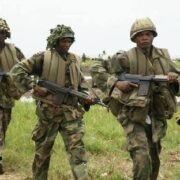
The Nigerian army has launched and commenced the first phase of training 800 special forces personnel so as to combat insecurity in the country.
The Defence Minister Muhammad Badaru, revealed via a statement that this training which took place at the Jaji military cantonment, Kaduna State, on Monday, March 24.
Badaru stated that the special forces are assigned high-impact operations with precision, speed, and efficiency so as to combat insecurity.
He noted that this initiative is part of a broader strategy to tackle the ongoing security challenges in the country.
Badaru emphasized that the changing landscape of modern security threats required an elite force that was not only well-equipped but also expertly trained in advanced tactics, such as unconventional warfare, intelligence-driven operations, and rapid-response missions.
He mentioned that the goal was to create a highly skilled, adaptable, and mission-ready force capable of carrying out specialized operations in diverse and complex environments.
The minister explained that training this special force would boost operational efficiency in tackling terrorism, insurgency, transnational crimes, and other asymmetric threats facing the country.
He also stated that the elite force would play a crucial role in safeguarding Nigeria’s sovereignty, protecting its citizens, and ensuring peace and stability both within the country and beyond its borders.
The statement read, “This training has been meticulously designed to develop highly skilled personnel in special combat tactics, counterterrorism operations, intelligence gathering and hostage rescue missions.
“The programme will prepare trainees for high-risk missions in both urban and hostile environments, ensuring they can adapt to dynamic threats.
“Given the inter-agency nature of modern security challenges, the training will foster seamless collaboration among personnel of the Nigerian Army, the Nigerian Navy, and the Nigerian Air Force, as well as other security agencies.”
The defense minister emphasized that special operations demand not only technical expertise but also mental strength and endurance.
He explained that the training would be designed to challenge and enhance the physical and psychological resilience of the soldiers, while focusing on leadership under pressure, instilling a strong sense of duty, discipline, and camaraderie among the participants.
Badaru also stated that by the end of this intense training program, the Armed Forces would have developed a force capable of executing high-impact operations with precision, speed, and effectiveness.
He stated that these skills would greatly enhance Nigeria’s capacity to counter threats and address security challenges proactively.
Adding that, “The newly trained special operations force will be deployed to critical areas across the country, reinforcing our national security architecture.
“This inauguration is for the first batch of 800 out of 2,400 to be trained as part of a long-term strategy to develop world-class special operations capability within the Armed Forces of Nigeria.”
Badaru guaranteed that Nigeria would maintain strong partnerships with allied countries and global defense organizations to adopt best practices and enhance coordination in joint operations.
He then urged the personnel to remain dedicated, resilient, and committed to their duties, encouraging them to give their all, surpass their limits, and take pride in being part of the elite force.
In conclusion, he expressed gratitude to President Bola Tinubu for his continued support and investment in security, highlighting the provision of advanced equipment and the prioritization of personnel welfare.




Comments