

Electricity consumers in the country are fast becoming frustrated over the constant increase of electricity tariffs, despite the low power supply from the government.
Poor electricity supply has remained a major problem for years.
Currently, the daily power load distributed to the 11 electricity distribution companies in the country is a meagre 2, 000 Megawatts, according to the Chief Marketing Officer at Abuja Electricity Distribution Company (AEDC), Donald Etim.
Sadly, this 2, 000MW is meant for consumption by over 200 million people, and thousands of industries in Africa’s largest country by population.
The country’s electricity challenge was at its peak in 2012, and this forced the Goodluck Jonathan-led administration, in 2013, to privatise the sector for $2.5 billion, a development that saw the distribution and generation segments divided into 17 companies, six GenCos and 11 DisCos.
Before the privatisation exercise, the administration of former President Olusegun Obasanjo had been accused of spending more than $15b on power projects, with no power to show.
At the Federal Executive Council (FEC) meeting, which took place in April this year, and was presided over by President Buhari, multi-billion naira contracts were approved for the power sector, as the Minister of Power, Abubakar Aliyu, while briefing State House correspondents, explained that all the three memos that his ministry presented scaled through.
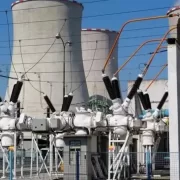
The approvals, according to him, were for the purchase of major electricity transmission equipment, which includes the procurement of power transformers and construction of a 260km transmission line in Kebbi State, costing N21.7 billion.
This came two weeks after the Council approved N1.4 billion for the purchase of additional equipment for the Transmission Company of Nigeria (TCN), as part of efforts to improve power supply. This is in addition to the $2.3b Siemens deal.
The Central Bank of Nigeria (CBN) is also funding the power sector with over N1.3 trillion.
The CBN launched the Power and Aviation Intervention Fund (PAIF) of about N300 billion; the Nigerian Electricity Market Stabilisation Facility (NEMSF) of about N213 billion, and the N140 billion Solar Connection Intervention Facility among others.
In April last year, the World Bank stated that it had aided the country’s power sector with the sum of $1.25 billion within two years.
Also in 2020, the Federal Government disclosed that it had secured $6.150 billion for infrastructural development of critical projects.
A breakdown of the fund showed that $3.2 billion was secured from Siemens and $1.6 billion from donor agencies for the Transmission Rehabilitation and Expansion Programme (TREP).
About $1.7b was said to be secured from the World Bank, African Development Bank (AfDB), and the Japan International Cooperation Agency (JICA).
As all these went on, the government kept subsidising the sector while the Nigerian Electricity Regulatory Commission (NERC) suspended the periodic review of tariffs since there was no improvement in service provision to justify any increase. At the same time, the Federal Government maintained borrowing as economic indexes and the operating environment compounded challenges in the sector.
Consequently, a series of planned tariff reviews were deadlocked as civil society organisations and labour clamour for improved service delivery, while the World Bank and International Monetary Fund (IMF) pressured the country to end the subsidy.
In 2020, the NERC finally approved tariff increases through its Service-Based Tariff (SBT). As the name suggests, the tariff was expected to be based on service provision.
President Buhari, while defending the increase in September of the same year, stressed that it was the only gateway to improving the power supply to the masses.
While the SBT implies billing consumers depending on the hours of electricity that they enjoy per day, the World Bank in the latest survey insisted that 78 percent of power consumers in Nigeria get less than 12 hours of supply daily. But data from the government data alleged that above 45 percent of Nigerians categorised under Band A, B, and C are enjoying between 13 to 24 hours of electricity daily.
Among other things, the increase was expected to address liquidity challenges alongside an improvement in the provision of electricity. As part of the bargain, consumers were also to be spared the trauma of purchasing electric poles, cables, transformers, and other basic needs that the privatised electricity companies should be fixing.
But as end users and consumer rights advocates were still clamouring against the unrealistic promises of the SBT, the NERC last January increased the tariff basing the hike on gas price, inflation, exchange rate, and available generation capacity. It added that these indices should be reviewed every six months to update the tariffs with changes in the indices as applicable in line with the Multi-year Tariff Order (MYTO).
The new tariff has about two to five naira increase for consumers under Band A to C, the previously frozen Band D and E, which the Federal Government claimed were subsidised to reduce the burden on poor Nigerians now have over N5 increase, The Guardian reports.
After NERC increased the tariff in January, it initially remained silent before releasing an order, earlier last month, and just a few days after openly defending the DisCos, by saying that they have been faced with inflation, foreign exchange challenges, and insecurity all of which have led to their inability to collect revenue.
But most stakeholders are miffed at this development, hence they are pointing out that the electricity supply has not improved, and the companies (especially the distribution companies) have equally failed to up service provision.
For instance, while generation capacity averaged 4, 500WM in 2020 when the SBT came into effect, it has now dropped to about 2,000MW and has remained like that for months. The same blame game is going on among other key players.
Even though revenue collection went up slightly, all the DisCos except one met the minimum remittance order that was set by the NERC. The mass-metering programme, which was launched against the backdrop of the SBT, did not also progress. Indeed, the national grid collapsed repeatedly after the introduction of the SBT.
The mounting troubles hit the roof in March this year when 14 power plants went down due to lack of gas and other issues.
The power generation companies (GenCos) also accused the government of not meeting up with its financial obligations, adding that its (government’s) indebtedness to the GenCos was above N1.6 trillion.
The Nigerian Bulk Electricity Trading Company Plc, which stands between the generating companies, and the DisCos to trade electricity, instead of a willing buyer and willing seller market, claimed that the GenCos were paid. On the other hand, the DisCos are blaming TCN for running obsolete equipment leading to frequent grid collapse.
While the blame being bandied is largely system-based and not from the end-users/consumers who are yet to understand the rationale behind the tariff increase, the NERC has disclosed that a review of tariff would go on every six months. This implies that a new review is due in July this year.
In the tariff Band A, end-users must enjoy 20 hours of electricity supply daily. Under Band B, consumers must, at least, enjoy at least 16 hours of power supply; 12 hours of power supply is reserved for those under Band C, and eight for those under Band D. Those under Band E must enjoy at least four hours of electricity daily.
Sadly, the reality on the ground simply presents the SBT as a grand scam, as electricity generation capacity has continued to drop while consumers are frequently thrown into darkness over the persistent collapse of the national grid.
In the last eight years, the national grid has collapsed more than 140 times despite over $1.6 billion investment being pumped into the transmission segment of the sector from donor funds and borrowings from the World Bank and the African Development Bank.
Most industry players and consumer rights groups are livid with the situation and are even calling on the Federal Government to cancel the 2013 privatisation exercise, which sold assets of the public electricity operator to private hands.
Still heavily dependent on borrowing, donor funding, and government funding, the power sector, according to some consumer rights advocates, is surviving on the sweat of end-users, who continually procure electricity transformers, poles, wires, and others for their use, while the ownership of such utility changes to the privately-owned distribution companies immediately after purchase.


Comments