
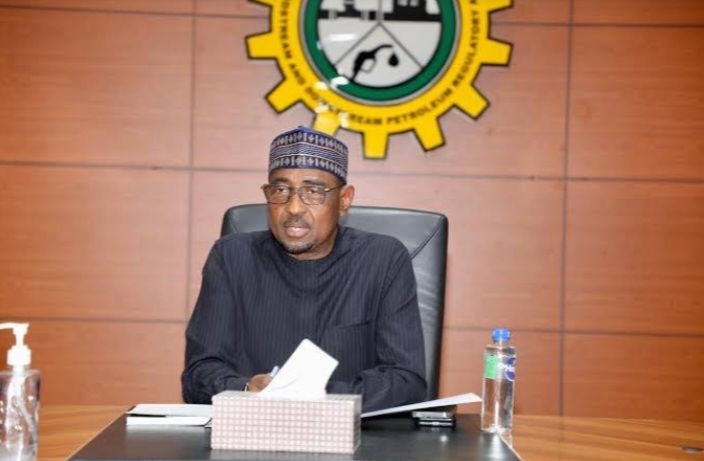
The Chief Executive Officer of the Nigerian Midstream and Downstream Petroleum Regulatory Authority, NMDPRA, Engr. Farouk Ahmed, has dismissed allegations that the funding of his children’s foreign education was linked to corrupt practices, describing the claims as misleading and poorly timed.
In a statement released on Tuesday, Ahmed said he welcomes public scrutiny and has formally invited the Code of Conduct Bureau, CCB, and the Economic and Financial Crimes Commission, EFCC, to investigate his asset declarations and financial records, expressing confidence that his conduct over more than three decades in public service would stand up to examination.
His response comes amid heightened tensions in the downstream petroleum sector, following disputes over fuel import licensing, quality enforcement, and accusations of regulatory bias. Ahmed stressed that he does not support monopoly control of premium motor spirit, popularly known as petrol, and said allegations and counter-allegations within the industry should be handled professionally by the appropriate authorities.
Tracing his career to 1991, Ahmed said he joined Nigeria’s petroleum administration through the civil service and rose from a junior engineer to head the downstream regulator through merit and technical competence rather than political patronage. He added that experience across crude oil marketing, gas supply monitoring, and downstream operations shaped his commitment to regulatory integrity.
Addressing claims that he spent about $5 million on his children’s education in Switzerland, Ahmed said the figures were inaccurate and ignored verifiable facts. He explained that three of his four children received merit-based scholarships covering between 40 and 65 per cent of tuition, while additional support came from education trust funds established by his late father before his death in 2018.
He said his own contributions were drawn from legitimate earnings and savings accumulated over more than 30 years in public service.
Ahmed disclosed that his annual compensation as NMDPRA chief is about ₦48 million, including allowances, noting that this information is contained in publicly available audited reports. He added that he has consistently submitted asset declarations to the Code of Conduct Bureau since joining public service and has authorised his children’s schools to release relevant financial records to authorised investigators.
He linked the resurgence of the allegations to recent regulatory actions by the NMDPRA, including stricter enforcement of fuel quality standards, tighter licensing requirements, and transparent pricing mechanisms, which he said disrupted entrenched interests that benefited from regulatory opacity.
Defending the issuance of fuel import licences, Ahmed said the Petroleum Industry Act mandates the authority to ensure supply security and prevent fuel scarcity, warning that reliance on a single source of supply, regardless of ownership, poses risks to national energy security.
He noted that since 2021, the NMDPRA has published monthly supply reports, introduced depot-to-station tracking to curb diversion, reduced fuel queues, and subjected its operations to audits by international firms.
In the statement, Ahmed formally asked the CCB to review all his asset declarations, urged the EFCC to examine his financial transactions, and called on the National Assembly to exercise its oversight functions. He pledged full cooperation with any investigation conducted objectively and without preconceived conclusions.
Ahmed maintained that he would not be pressured into compromising regulatory independence or granting preferential treatment to any entity, stressing that his actions as regulator are guided solely by national interest.
He concluded that while reforms in the downstream petroleum sector may generate resistance from powerful stakeholders, he remains committed to implementing the Petroleum Industry Act and upholding transparency, insisting that integrity and principled regulation will ultimately prevail.



Comments