
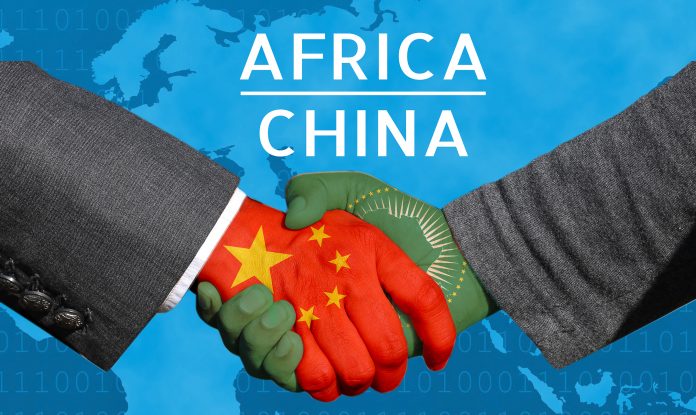
Over the last two decades, China has established a significant economic presence in African countries, with the relationship between both expanding on growing bilateral trade and strategic cooperation.
China has become a central player in Africa’s urbanization push, with a huge percentage of the continent’s infrastructure initiatives being pushed by Chinese companies and backed by Chinese funding.
With Chinese companies gaining access to almost all African markets, the country has turned into the continent’s largest trading partner and largest creditor.
The Belt and Road Initiative (BRI), launched in 2013 by Chinese President, Xi Jinping, is widely considered to be the centerpiece of development, especially in Africa.
The Belt and Road Initiative is known to be attractive to developing countries for several reasons. For instance, in the case of Africa, it could contribute to meeting the continent’s huge infrastructure financing requirement.
This program is also associated with practical and affordable Chinese technology, available capital and equipment, and high speed of infrastructure construction.
While some believe that the relationship between China and Africa is a win-win situation for mutual benefit and common development, others are beginning to wonder if China has become Africa’s new colonial power, taking over the continent a step at a time.
in South Africa, Uganda, and Kenya, Mandarin is offered as a selective language, while in Uganda it’s now a compulsory subject in some schools.
Over time, African countries have been chasing dreams of a better economic future while burying themselves in massive amounts of infrastructure-induced debt that they may not be able to actually afford.
There have been growing concerns about these loans as much of the debt owed by African countries to China relates to large infrastructure projects like roads, railways, ports all under President Xi Jinping’s Belt and Road Initiative.
The critical question asked now, is if African countries will be able to generate enough gains through these infrastructures built under the Belt and Road Initiative to repay their loans.
Records have shown that most of China’s commercial loans are connected to projects, which are tied to certain terms and conditions.
In payback for financing and building the infrastructure that poorer countries need, China often demands favourable access to their natural assets, from mineral resources to land and seaports, and this is because Chinese loans are collateralized.
Once these projects are in operation, many of these African countries are unable to generate enough gains to service their loans, which automatically put these countries in a debt trap, sometimes paving the way for China to take over their national assets.
The internet went wild last year following the news of a possible takeover of the only Uganda international airport by China over a $207 million loan deal.
The news broke out despite reports that President Yoweri Museveni had sent a delegation to Beijing for a renegotiation with the Chinese government over toxic clauses involved in the loan deal.
Although the Chinese and Uganda government has denied the possible take over of the Entebbe International Airport, it raises concerns about the terms and conditions of China loans to African countries.
The EXIM Bank of China had funded the construction of Hambantota port in Sri Lanka. The $1.3bn port was built with loans from a Chinese state-owned bank and opened in 2010. But the Sri Lankan government had struggled to repay the debt, with the project incurring heavy losses.
In 2015, Sri Lanka, unable to pay the debt to China, formally handed over the port and more than 15,000 square feet of areas around it to China on a 99-year lease.
China’s lease agreement over Hambantota included a promise that China would shave $1.1 billion off Sri Lanka’s debt.
Also, Djibouti trapped in a debt crisis had no choice but to lease land to China for $20 million per year, through which China established its first overseas military base in the country.
Meanwhile, economic and financial experts have warned the federal government that Nigeria risks losing key national assets to China if it defaults in paying back loans obtained from the country.
Data from the Debt Management Office as of September 2021, reveal Nigeria’s debt to China is currently $4.1 billion.
Researchers at AidData, a Washington-based Center for Global Development (CGD), Germany’s Kiel Institute, and the Peterson Institute for International Economics compared Chinese loan contracts with those of other major lenders to produce the first systematic evaluation of the legal terms of China’s foreign lending, according to CGD.
Their analysis uncovered several unusual features to the agreements that expanded standard contract tools to boost the chances of repayment.
These include confidentiality clauses that prevent borrowers from revealing the terms of the loans, informal collateral arrangements that benefit Chinese lenders over other creditors, and promises to keep the debt out of collective restructurings.




Comments