
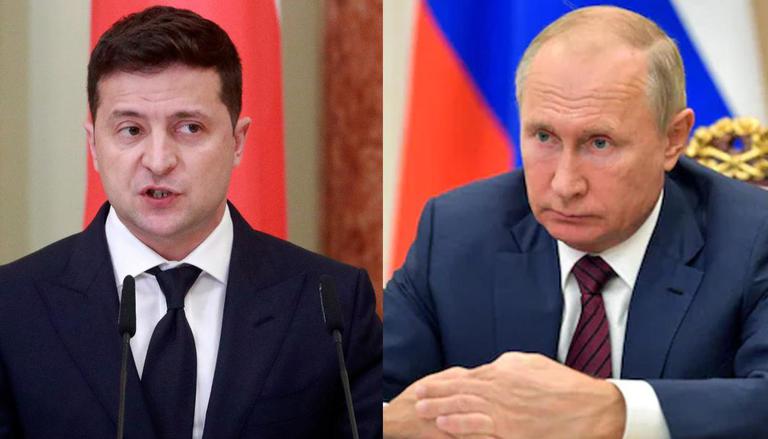
On Thursday, 24 February, the world went wild following an order from Vladimir Putin, President of Russia, to invade the sovereign geographical entity of Ukraine.
The invasion follows after several denials from Putin about attacking Ukraine, with shocking reverberation of bombs dropping on major cities in Ukraine.
At least 137 people are said to have died as Russian bombs continue to cascade down the sky of Kyiv, Dnipro, and other cities in Ukraine.
Putin has been accused of shattering the peace in Europe, and various world leaders have called for a cease in the war, with others announcing and implementing strict sanctions on Russia, especially their banks and Oligarchy.
History of the tension
The Soviet republic of Ukraine declared independence from Moscow in 1991.
Things remained quiet in the new democracy until 2004 when a pro-Russian candidate was declared president. Allegations of vote-rigging triggered protests and democracy was restored when the pro-western former prime minister, Viktor Yushchenko was then named the rightful winner.
In 2008, Nato promised Ukraine it would one day join the alliance, but the promise never materialized.
Two years later, in 2010, a pro-Russian president was elected. Viktor Yanukovich, who was originally declared the winner in the rigged 2004 election, formally took office. He suspended trade with the European Union and revived ties with Moscow.
In 2014 violent protests gripped the capital of Ukraine, Kyiv which forced a change in leadership and Yanukovich fled to Russia.
In 2019 a missile brought down a passenger plane in Eastern Ukraine, killing all 298 people on board. Investigators traced the weapon back to Russia, but the country has denied any form of involvement.
Ever since there has been tension in the two breakaway regions in eastern Ukraine. The same regions Putin declared independent this week.
Fast forward to January 2021, Ukrainian president, Volodymyr Zelenskyy asked Biden to allow Ukraine to join the NATO alliance, the new development brought about fresh tension and in response, Russian troops began massing near Ukraine’s borders.
This brings us to the current situation. Putin finally ordered the invasion of Ukraine.
Why is Putin against Ukraine joining NATO?
The North Atlantic Treaty Organization (NATO) has always had its eyes on Ukraine, a pursuit that has provoked Russia deeply over the years.
Putin claims Ukraine was entirely created by communist Russia and is now a puppet state, controlled by the West.
He sees Ukraine’s romance with NATO as a bombardment by its Western enemies across numerous sides.
The President also claims that if Ukraine is allowed to join Nato, the alliance might try to recapture Crimea, a country formally annexed by Russia, and legalized by Russian law as a federal subject.
In December 2021, Putin had warned NATO that deploying weapons or soldiers into Ukraine would cross a “red line” for Russia and trigger a strong response from the Kremlin.
Russia’s deputy foreign minister Sergei Ryabkov has said: “For us, it’s absolutely mandatory to ensure Ukraine never, ever becomes a member of Nato.”
However tension boiled over with the new year, and it erupted into a war on Thursday, February 24, 2022.
What does Putin want?
President Putin has blamed his decision to attack Ukraine on Nato’s eastward expansion.
He wants Nato to remove its forces and military infrastructure from member states that joined the alliance from 1997 and not to deploy “strike weapons near Russia’s borders”. That means Central Europe, Eastern Europe, and the Baltics.
President Putin claims the West promised back in 1990 that Nato would not expand “an inch to the east” but did so anyway.
He also wants to stop Ukraine from being, in his own words, “a puppet” of the West.
He claims “step by step, Ukraine was dragged into a dangerous geopolitical game aimed at turning Ukraine into a barrier between Europe and Russia, a springboard against Russia.”
What has the West done to support Ukraine?
The leaders of the West have been airing their condemnation of the Russian invasion of Ukraine since it began.
The leaders in the West have announced and implemented various sanctions to weaken the Russian economy.
The US has cut off Russia’s government from Western financial institutions and targeted high-ranking oligarchies.
The UK has ordered all Russian banks would have their assets frozen, with 100 individuals and entities targeted.
Germany has halted approval on Russia’s Nord Stream 2 gas pipeline, a major investment by both Russia and European companies.
The EU has promised to restrict Russian access to capital markets and cut off its industry from the latest technology. It has already imposed sanctions on 351 MPs who backed Russia’s recognition of the rebel-held regions.
What actions has NATO taken?
Nato has put warplanes on alert but the Western alliance has made clear there are no plans to send combat troops to Ukraine itself.
Instead, they have offered advisers, weapons, and field hospitals.
Meanwhile, 5,000 Nato troops have been deployed in the Baltic states and Poland. Another 4,000 could be sent to Romania, Bulgaria, Hungary, and Slovakia, BBC reports.
Diplomacy?
Different world leaders have called for calm and diplomacy between Russia and Ukraine.
Before the full invasion by Russia of Ukraine entity, there have been several meetings, with various world leaders trying to call for peace.
However, Zelenskyy had announced the country would break diplomatic relations with Moscow in response to Russia’s invasion.
“We broke off diplomatic relations with Russia,” Zelenskyy said in a video message on Thursday.
How does the Russian invasion affect Europe?
The invasion would have an effect on many other countries bordering both Russia and Ukraine, as counties prepare for refugees.
In reaction to the invasion, oil rocketed more than eight percent, with European benchmark Brent prices briefly cruising past $105 per barrel for the first time since 2014, while aluminum and wheat surged to record peaks on fears over output from a major exporter, Russia.
European natural gas prices vaulted higher on disruption worries, particularly after Germany this week halted the approval of the Nord Stream 2 pipeline from Russia.
Domestic energy prices had already rocketed in Europe during recent months, fuelling decades-high inflation that has caused central banks to raise interest rates, which could in turn slow the economic recovery.




Comments