
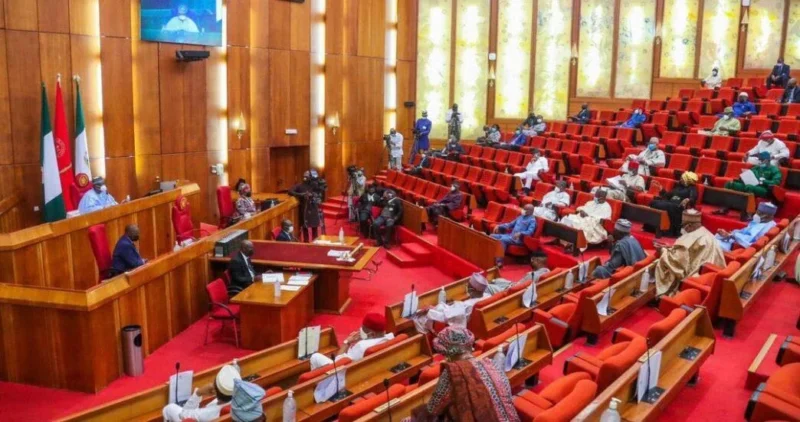
The Senate Committee on Tertiary Institutions and TETFund on Wednesday engaged officials of the Joint Admissions and Matriculation Board, JAMB, over concerns bordering on examination charges, technical glitches, and access to tertiary education, especially for candidates in rural areas.
At the meeting, Senator Amos Yohanna criticised what he termed increasing financial pressure on students at a time of widespread economic hardship.
He questioned the rationale behind the charges imposed on candidates, stressing that many households are grappling with poverty.
Lawmakers also pointed to recent technical difficulties encountered by candidates trying to access JAMB’s portal.
They asked the board to explain steps being taken to improve the platform’s efficiency and ensure a smoother experience for prospective undergraduates.
Chairman of the committee, Mohammed Dandutse, called for better coordination in the admission process, noting that students routinely face obstacles in gaining admission into universities and other tertiary institutions due to poor collaboration among relevant bodies.
He further emphasised the importance of ensuring that all revenue generated by the board is remitted to the federation account in compliance with financial regulations, describing this as critical for accountability and sustainability.
Members of the committee also raised concerns about limited access to registration and examination centres in rural communities, saying the situation disadvantages many qualified candidates.
In addition, the lawmakers sought clarification over the board’s increased budgetary allocation, exceeding one billion naira.
They requested details on whether the additional funds would be used for staff recruitment and asked for a breakdown of the proposed spending plan.
Responding to the queries, JAMB officials announced plans to establish more computer-based test, CBT, centres across the country to address access gaps, particularly in underserved regions.
The board disclosed that about one million candidates are projected to take part in the 2025 admission exercise, marking a notable rise in enrolment figures.
It also unveiled a proposed internally generated revenue, IGR, target of ₦23.8 billion for the 2026 fiscal year.






Comments