
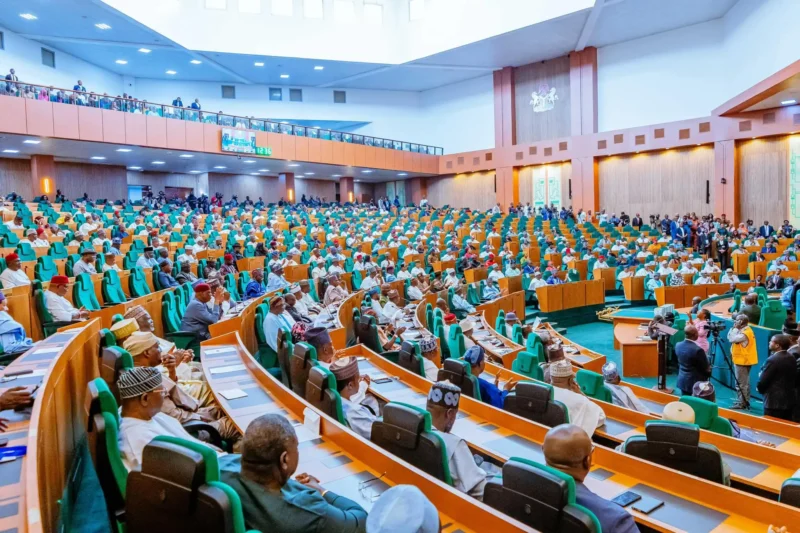
The senate has step down further consideration of the Nigeria Coast Guard (Establishment) Bill, 2026, to allow for wider consultations over concerns that the proposed agency could possible overlap with the functions of existing security agencies.
The decision followed the presentation of a report by the senate committee on marine transport, which had recommended the passage of the bill.
The proposed legislation seeks to establish a dedicated coast guard service to strengthen maritime security, protect Nigeria’s waterways and support economic activities in the marine sector.
Presenting the report during Wednesday, July 22, plenary, the committee chairman, Wasiu Eshilokun, said the committee held a public hearing and consulted relevant stakeholders, with the majority supporting the bill because of the need to improve security across Nigeria’s maritime domain.
He said the proposed coast guard would complement existing security agencies and strengthen Nigeria’s capacity to tackle piracy, maritime crimes, accidents and other threats.
According to the report, Nigeria’s 853-kilometre coastline and extensive inland waterways require a specialised maritime security outfit.
To address concerns about possible conflicts with existing agencies, particularly the Nigerian navy, Eshilokun said the committee proposed amendments to clarify that the coast guard would serve as a specialised security component responsible for maritime safety and security within its jurisdiction rather than operate as a separate armed force.
The committee chairman added that the proposed agency would oversee the protection of maritime zones, commercial shipping activities, loading and offloading operations, maritime transportation and related activities, while improving Nigeria’s compliance with international maritime standards.
However, senate president Godswill Akpabio cautioned against establishing another security agency without first addressing the challenges confronting existing institutions.
Akpabio said the Nigerian marine police, which already performs some maritime security functions, requires better funding and equipment to operate effectively.
“The marine police is yet to be well funded. They need submarines. They need to be well armed. They need to approach the international waters.
Right now, they are only running around shallow waters,” he said.
He also warned that establishing another security outfit without clearly defining its responsibilities could create unnecessary overlaps and confusion.
“The fact that the naval police are also available, and whatever this creation of other militia within the ports will cause confusion, and their functions will not be well delineated,” he said.
The senate president consequently called for the bill to be temporarily withdrawn to allow for broader consultations with relevant stakeholders.
“I think we should withdraw this for further consultations before we bring it to the senate. Not that we are killing the bill; we are only withdrawing it for further consultations,” he said.
Following Akpabio’s intervention, Eshilokun sought the senate’s approval to step down further consideration of the bill, and lawmakers approved the request.
The proposed legislation has generated mixed reactions since its introduction.
At a public hearing on the bill, the Minister of marine and blue economy, Adegboyega Oyetola, backed the establishment of the Nigerian coast guard, saying it would complement the Nigerian navy by focusing on search and rescue, environmental protection and enforcement of civil maritime laws.
The director-general of the Nigerian Maritime Administration and Safety Agency (NIMASA), Dayo Mobereola, also endorsed the bill.
However, the Nigerian navy opposed the proposal, arguing during the public hearing that the new agency would duplicate the functions of existing security institutions.
Some civil society organisations have also rejected the bill, describing the proposed coast guard as an unnecessary addition to existing maritime security agencies.
The groups warned that creating another agency could lead to overlapping responsibilities, waste public resources and weaken coordination within the maritime security sector.





Comments