
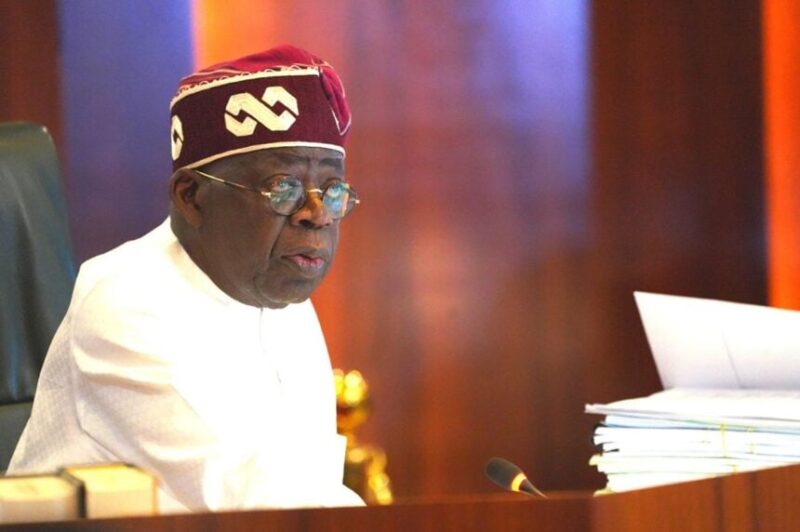
In response to a dramatic rise in attacks, kidnappings, and banditry across Nigeria, President Bola Ahmed Tinubu on Wednesday declared a nationwide security emergency.
The declaration, contained in a statement personally signed by the President, comes after several violent incidents in the past two weeks, which have targeted schools, churches, and rural communities.
President Tinubu also directed an immediate expansion of the Nigerian Armed Forces and police, emphasizing urgent recruitment to strengthen the country’s security apparatus.
In Kwara State, over 30 worshippers were abducted during an attack on the Christ Apostolic Church, CAC, in Oke Isegun, Eruku, while attending a church service. Gunmen opened fire on residents, causing panic and mass displacement. In a related incident, more than 20 people, including children and nursing mothers, were kidnapped in the Isapa community of Kwara State.
On November 17, armed bandits attacked Government Girls Comprehensive Secondary School in Maga, Danko/Wasagu LGA, killed the vice‑principal and wounded a guard, and then abducted 25 female students.
In a separate major attack, more than 300 people, students and staff, were abducted from St. Mary’s Catholic School, Papiri in Niger State.
These attacks have prompted temporary school closures in affected areas, as local authorities work with security forces to assess and contain the threat. President Tinubu has ordered 24-hour aerial surveillance over forested regions in Kwara, Kebbi, and Niger States, areas believed to harbor bandit hideouts, and directed ground troops to coordinate with the Nigerian Air Force for rapid response.
The recent surge in violence has also drawn international attention. U.S. President Donald Trump warned that Christians in Nigeria face an existential threat from what he described as radical Islamist groups. Trump suggested that the United States could take military action, describing a scenario in which intervention might be necessary.
The Nigerian government, however, has cautioned that the violence is largely indiscriminate, affecting both Christians and Muslims, and stems from deeper issues including poverty and the activities of heavily armed gangs. African Union officials have also rejected claims of genocide, emphasizing the multi-faith nature of the crisis.






Comments