
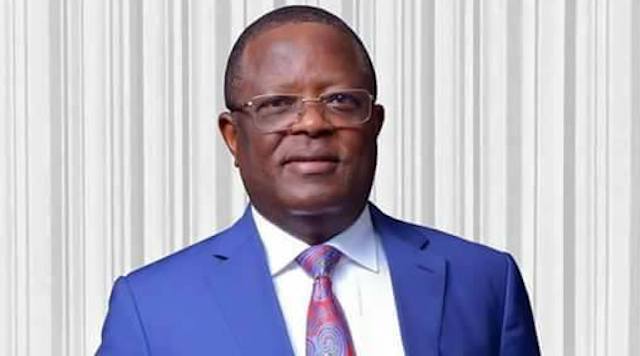
The Minister of Works, David Umahi, has announced that the administration of President Bola Tinubu is setting a new benchmark for road infrastructure in Nigeria, with highways designed to last between 50 and 100 years.
Umahi made the remarks during an inspection tour of the Abuja–Kaduna–Zaria–Kano Expressway (Section I). He explained that the Ministry of Works has adopted a forward-thinking engineering approach focused on durability, cost efficiency, and innovation, moving away from what he called the conventional cut-and-fill method often blamed for repeated road collapses.
In a statement issued by Mohammed Ahmed, Director of Press and Public Relations at the Ministry of Works, the minister said the new design framework integrates recycling, milling, and concrete reinforcement to create highways capable of withstanding decades of heavy use and harsh environmental conditions.
“We are building roads that will stand the test of time, roads that will last between 50 and 100 years, save public funds, and promote economic growth,” Umahi declared.
“Our goal is to ensure that no section fails prematurely. Nigeria must move away from the culture of patching and rebuilding every few years.”
He further explained that the innovative method recycles existing asphalt layers, which often have a stronger foundation due to years of compaction and use.
“You cannot achieve a better California Bearing Ratio by simply bringing laterite on the road. The existing subgrade, which has consolidated over years of traffic, has a stronger bearing capacity than a new one. That is why we are insisting on milling, stabilising and strengthening rather than removing old asphalt layers and replacing them,” he said.
Umahi highlighted that the Abuja–Kaduna section, handled by Infiouest International Limited, represents one of the most technically advanced road projects in the nation. He praised the company for adhering to international standards and deploying more than 300 units of heavy-duty machinery to accelerate progress.
According to the minister, the Tinubu administration’s Renewed Hope Agenda aims to replace asphalt roads with rigid (concrete) pavements on major highways—a move projected to save the government billions of naira in maintenance expenses.
“Wherever we have potholes within the carriageway, we don’t just patch; we treat the entire section with a stone base and, where necessary, stabilise it with cement. On the shoulders, we excavate about 10 centimetres below the existing asphalt, refill with a stone base slightly above the level and compact properly. This ensures stability and prevents water from undermining the structure,” he said.
“We are gradually phasing out flexible pavements. Concrete roads are more sustainable, especially for highways with heavy trucks.”
Umahi cautioned engineers and contractors against removing structurally sound asphalt layers, calling such practices both wasteful and technically flawed.
“Asphalt has a lifespan of about 25 years. If milled and recycled properly, it can last much longer. We must adopt international best practices and stop tearing down materials that are still good,” he advised.
Reaffirming the Federal Government’s commitment to infrastructure quality, the minister emphasized that all ongoing road projects must deliver long-term value to the Nigerian people.
“We are building roads that will stand the test of time, roads that will last 50 to 100 years, save public funds, and promote economic growth,” he affirmed.
The Minister of State for Works, Bello Mohammed Goronyo, who accompanied Umahi during the inspection, said President Tinubu’s focus on durable and economically efficient infrastructure aligns with his broader vision of ensuring accountability and value for every public expenditure.
Goronyo also lauded Umahi’s hands-on leadership, describing him as a “lmentor to a new generation of engineers learning quality construction standards.
Senior ministry officials, including Olufemi Adetunji, Director of Highways (Special Projects, North), noted that the minister’s consistent field presence has kept contractors disciplined and project quality intact.
Joseph Aboue Jaoude, Chairman of Infiouest International Limited, reaffirmed the company’s commitment to meeting both local and international standards, adding that the Abuja–Kaduna–Zaria–Kano Expressway has become a benchmark for quality in Nigeria’s road construction sector.
The President’s Special Assistants on Community Engagement, Abiodun Essiet (North Central) and Abdullahi Tanko Yakasai (North West), also commended the administration’s commitment to modernizing the country’s transportation infrastructure, describing it as a clear demonstration of Tinubu’s dedication to national development.
Nigeria’s extensive road network, spanning more than 195,000 kilometres, has historically suffered from substandard construction and poor maintenance, resulting in costly repairs and frequent accidents. The 375-kilometre Abuja–Kaduna–Zaria–Kano Expressway remains one of the nation’s most vital economic routes, linking the Federal Capital Territory with major northern commercial centres.
Originally awarded in 2018 during the Buhari administration and funded in part through the Presidential Infrastructure Development Fund, the project encountered delays due to insecurity, financing gaps, and redesign efforts. Under Umahi’s leadership, however, the government has introduced a new engineering model emphasizing rigid (concrete) pavement to ensure long-term strength and safety.
Upon completion, the expressway is expected to significantly reduce travel time, lower vehicle maintenance costs, and enhance both trade and security along the North-West corridor.





Comments