
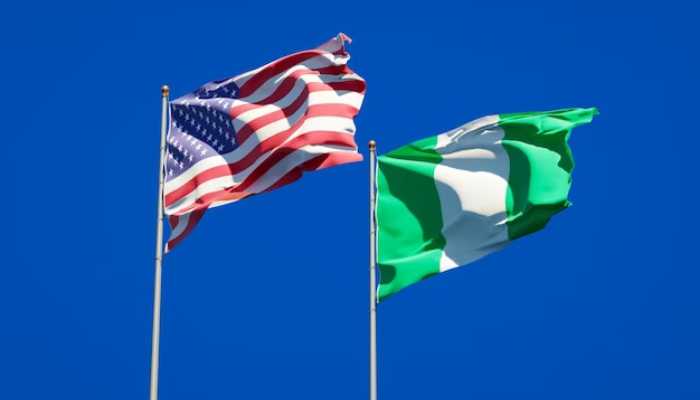
The United States, US, congress has urged the negotiation of a comprehensive bilateral pact with Nigeria focused on safeguarding vulnerable Christian communities, dismantling extremist groups, enhancing security collaboration and limiting the strategic footprint of China and Russia in the country.
The proposals emerged from a joint resolution adopted by the US House appropriations committee and the House foreign affairs committee, and were shared on X by Congressman Riley Moore.
In a statement entitled “Ending the Persecution of Christians in Nigeria,” US lawmakers praised US President Donald Trump for restoring Nigeria’s designation as a Country of Particular Concern, CPC, calling it a decisive move to promote accountability for acts of violence.
Nigeria was initially listed as a CPC in 2020 during Trump’s presidency but was subsequently removed under President Joe Biden.
US lawmakers are now advocating renewed actions, including targeted visa restrictions and asset freezes against individuals and entities accused of violating religious freedoms.
The congressional recommendations referenced former Kano state governor Rabiu Kwankwaso, as well as the Miyetti Allah Cattle Breeders Association of Nigeria and Miyetti Allah Kautal Hore.
According to the statement, Trump directed Moore, US House appropriations chairman Tom Cole and other legislators to examine allegations of persecution and attacks on Christian populations.
Appropriations Vice Chair Mario Diaz-Balart spearheaded an investigative roundtable and led a congressional delegation to Nigeria.
Separately, US House foreign affairs committee chairman Brian Mast and Africa subcommittee chairman Chris Smith organized hearings involving government representatives and civil society stakeholders.
Lawmakers said their findings culminated in policy proposals designed to bolster security responses, strengthen humanitarian assistance and deepen cooperation between the US government and the Nigerian government.
The committees alleged that Christian communities continue to face assaults from armed factions and criticised the application of blasphemy laws in parts of northern Nigeria, arguing that such laws may suppress dissent and disproportionately affect minority groups.
While recognising Nigeria’s strategic importance, they called for firmer political will and increased domestic investment to tackle insecurity.
At the core of the recommendations is a proposed security and economic framework that would prioritise community protection, counter-extremism efforts, expanded trade ties and resistance to geopolitical competitors.
Under the plan, Nigeria would share responsibility for funding humanitarian programmes, especially for internally displaced persons in the Middle Belt, enhance early-warning mechanisms, deploy sufficient security personnel and reclaim occupied farmlands to facilitate the return of displaced residents.
The lawmakers also proposed deeper defence cooperation, including transitioning from Russian military hardware to US defence systems through structured sales and financing deals.
They further recommended technical support initiatives such as demobilisation, disarmament and reintegration programmes to curb illicit arms proliferation and reinforce local security structures.
Other measures outlined include backing livestock and ranching reforms, revising land use policies, strengthening recruitment and training within Nigeria’s security agencies and intensifying counter-terrorism coordination against foreign extremist networks.
The US congress additionally called for action against what it described as foreign-backed illegal mining operations linked to armed groups, as well as tighter oversight of US assistance to Nigeria.
Further proposals encompass sanctions and visa bans for perpetrators of religious violence, reassessment of Sharia-based criminal codes and blasphemy laws, a government accountability office audit of US aid and closer engagement with partners such as France, Hungary and the United Kingdom.
Lawmakers said the recommendations present a once-in-a-generation opportunity to reshape US–Nigeria relations following Nigeria’s CPC redesignation and to reinforce collaboration on security, economic growth and regional stability.




Comments