
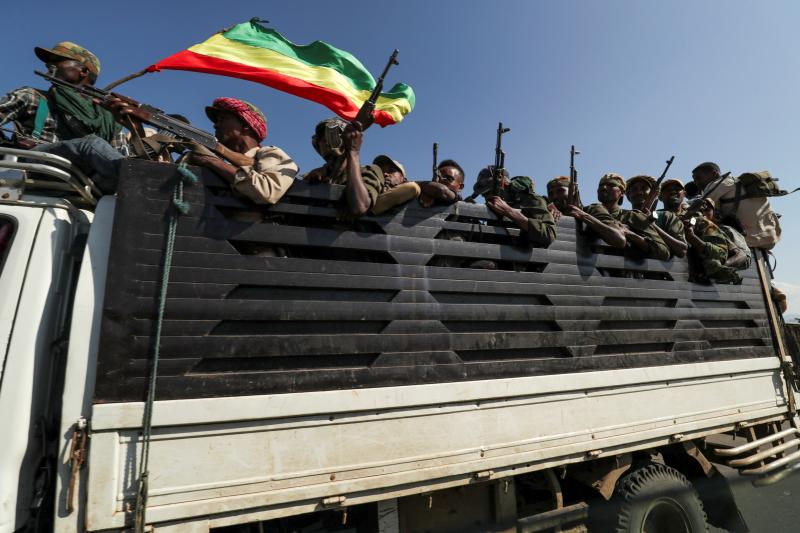
Unconstitutional military takeovers and civil wars have always been a threat to the democratic process in Africa.
Recently, Africa has been faced with civil wars, and several incidences of coups, most of which have been successful as well as an arbitrary transfer of power from civilian rule to military regimes.
In the 50s through to the 90s, military coups were a norm in Africa, more so, following the independence of most countries on the continent, but over time it began to fade. However, recently there has been a rise in the spate of successful or attempted coups across the continent.
Overall, Africa has experienced more coups than any other continent in the world.
With the recent activities happing in the continent, there is a great possibility that Africa will continue to suffer coups and civil wars in the future, bringing us to an era where coups and civil wars will be seen as normal.
More so the repetition of these activities will be a threat to the democratic process Africa has undergone in the past.
Recent coups in Africa
Recently, there have been two military takeovers in Mali, a successful coup in Guinea, and the most recent of all, that of Sudan.
Sudan has this year experienced two coups, a failed one in September, and the most recent in which Gen Abdel Fattah Burhan dissolved the civilian arm of a transitional government and took over.
The transition government operating in Sudan, until the October 25 coup, was a power-sharing arrangement between the military and civilians, following the April 2019 overthrow of former President Omar al-Bashir.
In Guinea, President Condé was ousted by the army in September, and in neighboring Mali, there have been two interventions by the army in less than a year, the most recent one in May.
In Niger, there was a failed coup in March just days before a presidential inauguration.
Civil wars in Africa
Several civil wars have rocked various African countries over the years, leading to the death, injury, and displacement of millions.
Majorly, civil wars are a result of violent conflict over the distribution of state power.
These civil wars often involved violent conflicts between a state government and one or more organized non-state actors or groups within the states geographical territory.
Various countries in Africa have experienced civil war, from the Biafran War in Nigeria in the late 1960s; to the Rwandan genocide; to Africa’s War in Congo; to the Darfur civil war; to the outbreak of war in South Sudan, and the most recent of all civil war in Ethiopia.
Last year, Ethiopian Prime Minister Abiy Ahmed was awarded the Nobel Peace Prize for the bold steps he took to make peace with Eritrea, as both countries have been known to fight extremely bloody border wars.
However, the peace seems to be short-lived as Ethiopia is currently faced with huge violent conflicts and is in a state of emergency, as rebel groups are advancing on the capital, Addis Ababa.
A conflict between the government of Ethiopia and forces in its northern Tigray region has thrown the country into turmoil.
While much has been said about the northern front, where the army is at war with the Tigray Defense Forces (TDF), another armed group allied to Tigrayans is fighting from the south and west of the country.
Following the recent activities in Ethiopia, many are concerned that the conflict may also spill across borders, dragging other African countries like Somalia and coup-prone Sudan.
A power struggle, an election, and a push for political reform are among several factors that has led to the crisis.
Why Africa may continue to suffer coups and civil in future
Oftentimes, it is the outcome of a civil war that births military takeovers in a country.
Over time, these coup leaders have always offered the same reasons for toppling governments, which are corruption, mismanagement, poverty, and many more.
Corruption in Africa has become a constant phenomenon, affecting all aspects of the continent, which has continued to undermine the social, economic, and political development of the continent.
Mismanagement of funds which is somewhat linked to corruption has enabled various governments in the continent to use the funds of these countries for their own personal benefit rather than for the development of the continent as a whole.
Oftentimes, if a civil war is set to begin, it is more likely to be initiated by an ethnic group than any other type of group. This is because when political power is divided between ethnic lines, ruling elites are known to favor their own ethnic group at the expense of others. This most times creates grievances and conflicts amongst various groups.
The number of poor has continued to rise as a result of the growing population in Africa. Despite a wealth of natural resources, African nations typically fall toward the bottom of any list measuring small size economic activity.
Also, the proliferation of weapons in Africa has facilitated various acts of crime and enhanced civil wars in the continent.
Most of the inter and intra state civil wars with devastating consequences have been fuelled and sustained by the production, sale, and distribution of small arms and light weapons.
The above mentioned are major reasons why African nations may continue to experience coups or civil wars in the future.




Comments