
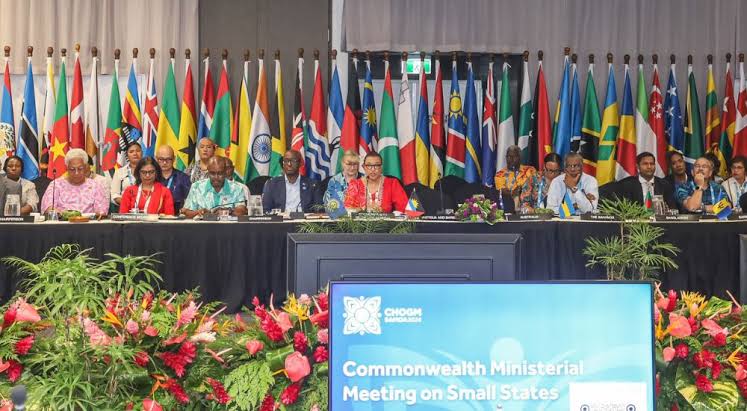
World leaders, government officials in Samoa and various partner organizations have committed to intensifying their efforts to tackle non-communicable diseases and mental health challenges.
This commitment was announced during a side event at the Commonwealth Heads of Government Meeting in Apia, Samoa, as stated in a report on Thursday, October 24.
The event, titled ‘Weaving a Healthy Commonwealth Aiga for Combating NCDs and Promoting Mental Health,’ was jointly organized by the Samoan Ministry of Health, the World Health Organization’s (WHO) representative office in Samoa and the Commonwealth Secretariat.
The event emphasized the necessity of robust political commitment, collaboration, and community engagement in addressing the global health challenges related to non-communicable diseases and mental health.
Representatives from diverse sectors such as health, education, sports, finance, agriculture, trade and media shared their perspectives and strategies for fostering environments that encourage healthier lifestyles and strengthen health systems.
The statement indicated that non-communicable diseases (NCDs), including cardiovascular diseases, cancers, chronic respiratory diseases and diabetes, are the primary cause of death in many countries.
These conditions lead to 150 million premature deaths among individuals aged 30 to 70, with the majority occurring in developing nations.
Emphasizing Samoa’s distinctive strategy, the Director General of Health, Prof. Aiono Alec Ekeroma, stated that, “the Ministry of Health has successfully introduced the ‘Package of Essential NCD Services Fa’a Samoa’ into our communities, demonstrating our strong commitment to tackling NCDs and mental health issues.
“We continue to seek innovative ways to strengthen our partnerships with other sectors to reduce NCDs and improve mental health.
“The Samoan government is dedicated to fostering these collaborations to ensure sustainable and impactful health outcomes for our people.”
Dr. Kim Dickson, the WHO Representative for Samoa, American Samoa, Cook Islands, Niue, and Tokelau, remarked that, “tackling NCDs and mental health is not just a job for the health sector.
“It requires the dedicated involvement of the whole of government and the whole of society.
“By working together across different sectors and tapping into community strengths, we can significantly reduce the burden of NCDs and mental health conditions.”
The statement noted that NCDs have emerged as a significant issue for individuals under 30, who represent 60 percent of the Commonwealth’s population.
It also mentioned that during the last Commonwealth Heads of Government Meeting (CHOGM) in Rwanda in 2022, the Commonwealth youth-led ‘NCD Guiding Framework’ was established to create a roadmap for collaborative efforts to tackle the underlying causes of NCDs and encourage healthier lifestyles, particularly among young people.
The Commonwealth Secretary-General, Patricia Scotland, said, “In Rwanda, we committed to take bold multisectoral action to reduce the incidence of NCDs.
“This year here in Samoa, the Commonwealth remains committed to strengthening partnerships that support health equity and sustainable development.
“By coming together as a Commonwealth ‘aiga’ or family today, our leaders and stakeholders have underscored the collective resolve to combat NCDs and promote mental health.”
In addition to emphasizing the need to tackle non-communicable diseases and mental health issues, the event underscored the significance of promoting healthy aging.
At the event, a report called ‘Aging Well in the Commonwealth: A Roadmap for Healthy Aging,’ written by Prof Dame Black, the Commonwealth Secretary-General’s Special Envoy for Aging Well, was presented.
It stated that, “as people live longer by prioritising strategies to prevent NCDs, it is equally important that they continue to thrive and live productive lives.
“The event concluded with renewed commitments from various sectors and stakeholders to work together to combat NCDs and promote mental health, helping set the stage for continued collaboration and action within the Commonwealth.”



Comments