
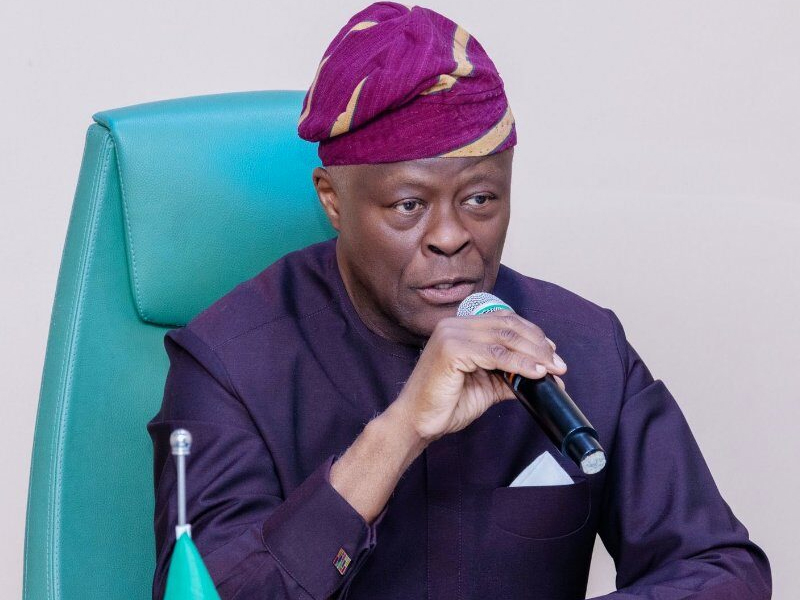
Wale Edun, Nigeria’s Minister of Finance and Coordinating Minister of the Economy, announced that the government’s increased revenue for the 2024 fiscal year is being strategically allocated to various social intervention programs aimed at enhancing the living standards of citizens and addressing urgent societal needs.
The social investment initiative is designed to support 60 percent of the country’s poorest population, with a target of reaching 20 million individuals.
During his address at the 30th Nigeria Economic Summit in Abuja on October 16, Edun revealed that the government’s revenue for the first half of 2024 had surpassed N9.1 trillion, more than doubling the N4.06 trillion generated in the same period of 2023.
This significant increase, he noted, was achieved through robust domestic resource mobilization and the application of technology to reform civil service practices.
The social investment program, which includes direct cash transfers, aims to support households directly affected by recent economic reforms. Currently, 4 million households are benefiting, with plans to expand this support to 15 million households.
Edun emphasized the government’s focus on diversifying the economy, particularly in agriculture, manufacturing, and the oil sector, to mitigate inflation and improve living conditions for Nigerians.
He stressed that the oil industry is crucial for generating foreign exchange, noting that recent reforms have attracted substantial investments, including an additional $10 million from ExxonMobil.
Other initiatives include a student loan scheme and consumer credit options for workers to facilitate the purchase of household goods and the conversion of vehicles to cleaner Compressed Natural Gas.
The government is also providing up to N75 billion in grants and loans to support one million small and micro enterprises, while larger companies are receiving N75 billion in tranches to manage production costs.
Edun concluded by highlighting that these measures are part of President Tinubu’s strategy to utilize the increased revenue driven by improved oil production and macroeconomic reforms, ultimately aiming to save Nigeria up to 5 percent of its GDP.
In related remarks, Ndiamé Diop, the World Bank Country Director for Nigeria, acknowledged the notable increase in Nigeria’s revenue, predicting improvements in the revenue-to-GDP ratio.
He warned that without ongoing reforms, Nigeria could face a significant fiscal crisis due to the current trajectory of spending outpacing revenue generation. Diop emphasized that these reforms are essential for stabilizing Nigeria’s fiscal position and ensuring sustainable economic growth.

Share this:
- Click to share on WhatsApp (Opens in new window) WhatsApp
- Click to share on Facebook (Opens in new window) Facebook
- Click to share on X (Opens in new window) X
- Click to share on Telegram (Opens in new window) Telegram
- Click to share on Pinterest (Opens in new window) Pinterest
- Click to print (Opens in new window) Print
- More



Comments