

Dr. Tunji Alausa, the newly appointed Minister of Education, has unveiled plans for a major overhaul of Nigeria’s educational framework, shifting the focus to a model that emphasizes 80 percent practical learning and 20 percent theoretical instruction.
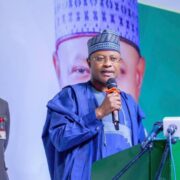
In his inaugural press conference held in Abuja on Tuesday, November 5, Alausa explained that this new approach aims to tackle the issue of unemployment by equipping students with hands-on skills that are highly relevant in today’s job market.
He further highlighted the government’s commitment to supporting agricultural universities in adopting mechanized farming practices as a means to enhance food security in the country.
This strategic shift is intended to better prepare students for the demands of various industries while promoting sustainable agricultural practices.
“We will focus on technical and vocational education (TVET), using federal technical colleges and national entrepreneurship institutions to create practical opportunities for students.
“All specialized universities will be required to have mechanized farms, and we will provide financial incentives to support this,” he stated.
In response to the ongoing issue of frequent strikes in tertiary institutions, Minister Alausa promised unions of what he called a new beginning, emphasizing his commitment to creating a supportive environment that will help avert extended school closures caused by labor disputes.
“This is a new beginning for ASUU, NASU, SSANU, ASUP, COEASU, and others,” he said.
He encouraged the unions to allow the government the opportunity to fulfill its obligations under President Bola Tinubu’s administration.
Alausa further committed to modernizing the education system to align with the demands of the 21st century, prioritizing STEM fields and medical sciences to enhance workforce development.



Comments