
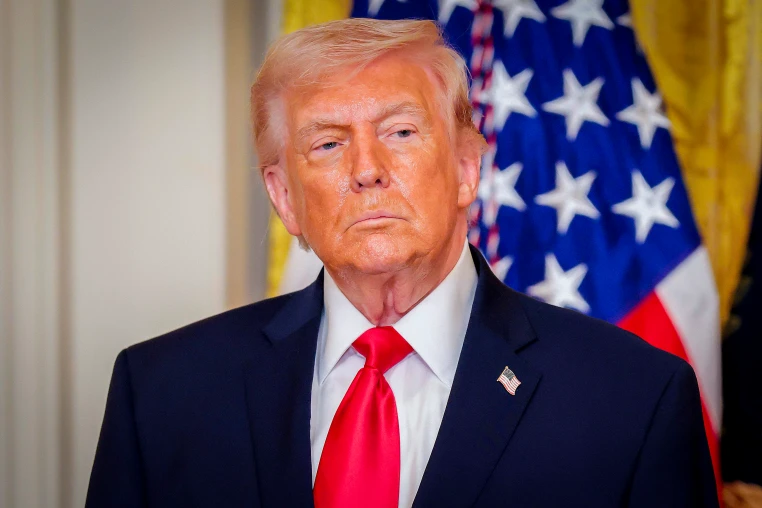
The United States (U.S) president Donald Trump on Saturday, March 21, gave Iran 48- hour ultimatum to reopen the Strait of Hormuz to shipping or face the destruction of its energy infrastructure, as Tehran launched its most destructive attack yet on Israel.
The ultimatum, made just a day after the US leader said he was considering winding down military operations after three weeks of war, came as the key oil passage remained effectively closed and thousands more American Marines headed to the Middle East.
Trump wrote on Truth Social that the U.S would hit and obliterate Iranian power plants, starting with the biggest one first, if Tehran did not fully reopen the strait within 48 hours.
Foreign minister Abbas Araghchi said Tehran had imposed restrictions only on vessels from countries involved in attacks against Iran, and would assist others that stayed out of the conflict.
In response to Trump’s threat, Iran’s army said it will target energy, desalination infrastructure belonging to the U.S and the regime in the region.
Trump’s ultimatum landed hours after two Iranian missiles struck southern Israel, injuring more than 100 people in the most destructive attack since the war began.
Israeli prime minister Benjamin Netanyahu vowed to retaliate on all fronts.
The strikes, which slipped through Israel’s missile defence systems, tore open the facades of residential buildings and carved craters into the ground.
The Israeli army said there had been a direct missile hit on a building in Dimona, with casualties reported at multiple sites, including a 10-year-old boy in serious condition with shrapnel wounds.
In Arad, emergency workers combed through the rubble of heavily damaged buildings.
Netanyahu vowed to continue striking Iran after what he called a very difficult evening, and hours later, the Israeli military said its forces launched a wave of strikes on Tehran.
Iran said the targeting of Dimona was retaliation for Israeli strikes on its Natanz nuclear facility, with the Islamic Revolutionary Guard Corps (IRGC) saying forces also targeted other southern Israeli towns as well as military sites in Kuwait and the UAE.
Following the Natanz attack, UN nuclear watchdog chief Rafael Grossi reiterated his call for military restraint to avoid any risk of a nuclear accident.
The Natanz facility hosts underground centrifuges used to enrich uranium for Iran’s disputed nuclear programme and sustained damage in the June 2025 war.
The Israeli military denied it was behind the Natanz strike, but said it had struck a facility at a Tehran university that it claimed was being used to develop nuclear weapon components for Iran’s ballistic missile programme.
The destruction in Israel capped three weeks of heavy U.S-Israeli bombardment that appeared to have done little to blunt Iran’s ability to retaliate with missile and drone attacks across the region.
Iran also launched an unsuccessful ballistic-missile attack on the U.S-UK base at Diego Garcia, around 4,000 kilometres (2,500 miles) away.
The United Arab Emirates (UAE) said it faced aerial attacks after Iran warned it against allowing strikes from its territory on disputed islands near the Strait of Hormuz.
Iran has choked off the vital waterway, which carries a fifth of global crude oil trade in peacetime.
The standoff has sent crude oil prices soaring, with North Sea Brent crude now trading above $105 a barrel, as long-term consequences for the global economy become an acute concern.





Comments