
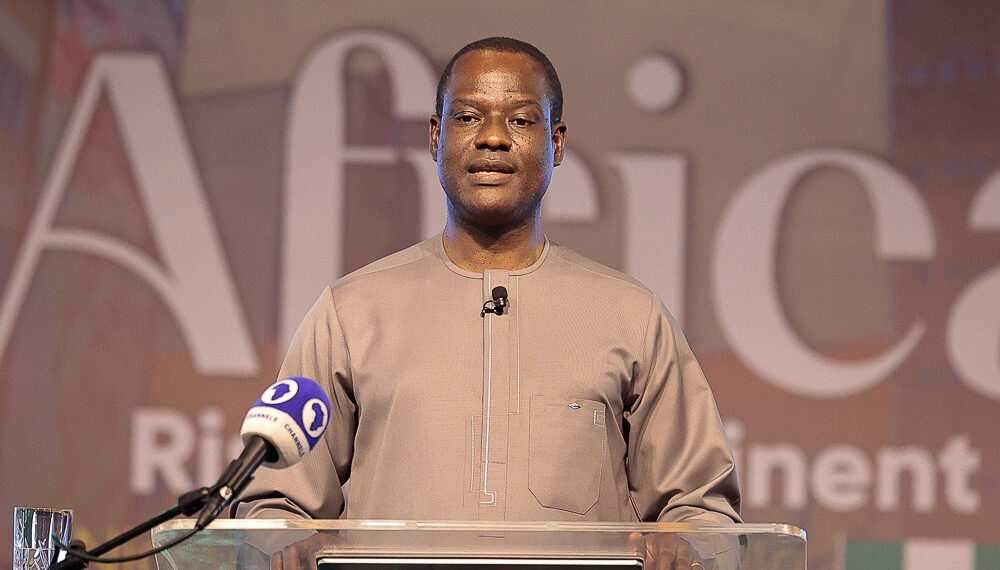
Taiwo Oyedele, chairman of the presidential committee on fiscal policy and tax reforms, has asserted that the suggested amendment to the distribution of value-added tax, VAT, aims to establish a more equitable system.
Following the Northern States Governors Forum’s, NSGF, recent rejection of the proposed tax amendment bill, Oyedele explained that the existing VAT distribution model negatively impacts numerous states.
In a post on X on Tuesday, October 29, he emphasized that the current approach allocates VAT based on the location where the tax is collected, rather than where goods and services are actually supplied or consumed.
“This issue, in fact, affects many states across all geopolitical zones because the current derivation is mainly determined based on where VAT is remitted, rather than where goods or services are supplied or consumed.
“Our proposal aims to create a fairer system by devising a different form of derivation which takes into account the place of supply or consumption for relevant goods and services whether they are zero-rated, exempt or taxable at the standard rate.
“For example, a state that produces food shouldn’t lose out just because its products are VAT-exempt or consumed in other states.
“The state where the supply originates should be recognized for its contributions. The same principle should apply to services like telecommunications—VAT distribution should reflect where subscribers are located.”
Oyedele stated that the committee plans to work closely with all stakeholders to tackle the issue, aiming for a balanced solution that benefits everyone involved.
On October 13, President Bola Tinubu urged the National Assembly to review and approve four tax reform bills, which include the Nigeria Tax Bill, the Tax Administration Bill, and the Joint Revenue Board Establishment Bill.
In response, the northern governors have called on the National Assembly to reject any legislation that could adversely affect the interests of their region. They emphasized the need for equitable and fair implementation of national policies and programs to prevent the marginalization of any geopolitical zone.





Comments